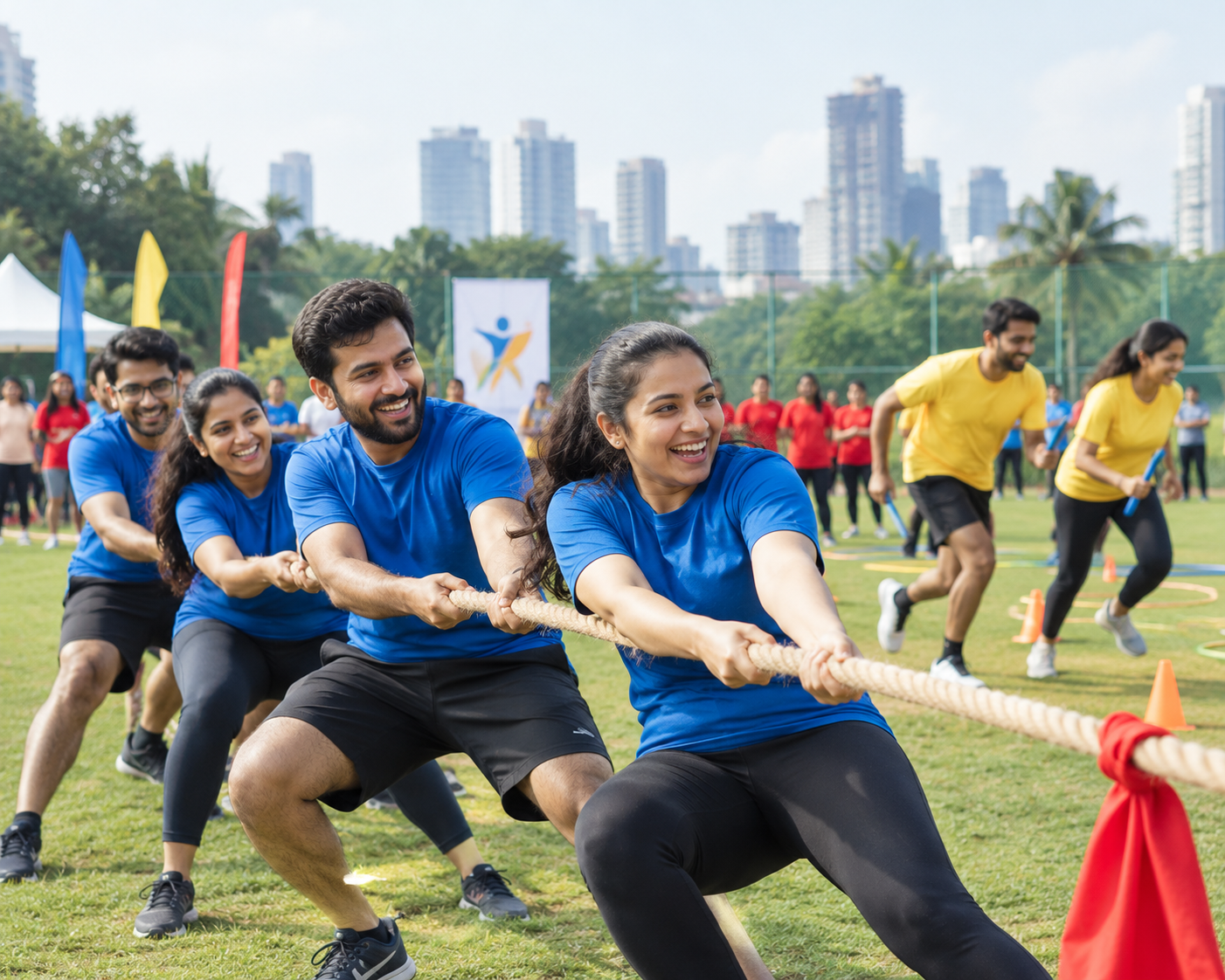
Corporate Sports Day in Mumbai: Games, Venues, Rules and a Run Sheet That Works for Everyone
Planning a corporate sports day in Mumbai? Games, venues, rules, safety, a timeline and a run sheet to make it work for everyone.
A corporate sports day in Mumbai can be the best day of the year or a logistical mess. It is the best when mixed teams are laughing together, people who never exercise find something they enjoy and leaders join in. It becomes a mess when it clashes with the weather, half the office does not know the rules and the only people who have fun are the ones who already play sport.
This guide gives you the planning steps, a game list for every ability, venue and safety guidance, a timeline and a sample run sheet.
Why Run a Corporate Sports Day
A sports day puts people from different teams on the same side, gives them a shared goal and creates stories that last. Research on team building, including a well-known meta-analysis in Small Group Research, found a positive effect on team outcomes, strongest for trust, cohesion and how teams work together. It also gets people moving. The WHO recommends adults do at least 150 to 300 minutes of moderate-intensity physical activity a week, and its guidelines on physical activity and sedentary behaviour recognise prolonged sitting as a health risk. One sports day will not meet that, but it can start a habit.
Corporate sport is also well established in India. The CII National Committee on Sports launched the Indian Corporate Cricket League in 2023, covering teams across several states including Maharashtra, with a stated aim of promoting health and fitness among the corporate workforce.
Decide the Format
A half-day sports day. Three to four hours, suited to a single office and a busy company.
A full-day sports day. Around six to eight hours, with a mix of competitions, lunch and an awards ceremony.
A sports week or season. Matches spread across several weeks, with a final event. Works well for cricket, badminton and football.
A family sports day. Includes families, with children’s races and relaxed games.
An inter-company event. Teams from several companies compete, which needs a neutral venue and shared rules.
Choose based on headcount, budget and how much time people can give.
Corporate Sports Day Games for Every Ability
Competitive team sports
Box cricket, football, throwball, volleyball and badminton doubles. See the guide to a corporate cricket tournament in Mumbai for running a cricket format.
Fun relay and field games
Relay races, sack races, three-legged races, lemon and spoon, tug of war, musical chairs and obstacle courses. These suit mixed ability and create laughs.
Indoor and low-impact games
Carrom, chess, table tennis, board games, quizzes and arm wrestling. These include people who prefer not to run or who have mobility limits.
Fitness challenges
Step challenges, plank holds, a team walk or a short group workout. These suit people who like measurable goals.
Team-building games
Treasure hunts, human knot, group puzzles and creative challenges that need collaboration more than athletic skill.
Children’s and family games
Races, sack races, colouring and a small playground area for families.
Non-playing roles
Scorers, referees, commentators, photographers, cheer squads, hospitality and organisers keep everyone involved.
Build the Teams
Use colour teams or house names and mix departments, levels and locations, so people meet new colleagues. Appoint a captain and a vice-captain for each team, and include at least one person from different functions and seniority levels. Make sure women, men and mixed-ability players are spread fairly. A balanced draw matters more than a perfect one.
Choose a Scoring System
Keep it simple. Award points for wins and participation, with extra points for fair play, team spirit and cheering. A point for every person who takes part encourages inclusion. Add a Spirit of the Game award and a most valuable player award, so recognition does not go only to the fastest. Publish the scoring before the day.
Pick a Venue in Mumbai
Club and school grounds. Often the best option for outdoor games, usually with permissions and a fee.
Open grounds. Popular, but permission may be needed, so ask early.
Indoor sports complexes and box cricket turfs. Reliable in all weather, suitable for badminton, table tennis, indoor cricket and football, usually booked by the hour.
Your own campus. Some larger campuses can host a small sports day, which saves travel.
Resorts outside the city. For a longer event, with travel and overnight planning.
Check access by train and road, parking, toilets, changing rooms, drinking water, shade, a first-aid point, power backup and floodlights.
Time It Around Mumbai
October to February is the most comfortable window. In March to May, heat and humidity make midday outdoor play difficult, so choose early mornings or evenings. In the monsoon from June to September, use indoor venues or avoid outdoor fixtures. Avoid festival clashes such as Diwali and Ganeshotsav, and busy periods such as financial year-end. Weekdays during work hours suit office-based teams, while weekends suit families.
Safety, Health and Insurance
A sports day carries real injury risk. Include a warm-up before each session. Ask participants to declare any medical conditions, and make clear nobody is required to play. Provide first aid, drinking water and shade, with a doctor or ambulance on call for larger events. Plan breaks in the heat. Use protective gear where needed. Check the ground and equipment. Ask your insurer or broker whether your cover includes employee sports events, and consider accident cover for the day. Speak to your legal counsel about any waivers. Keep alcohol out of the event.
Make It Inclusive
Offer games at different intensities, so that every person can take part. Include indoor and low-impact options. Give non-players roles. Provide food for different diets. Think about accessibility for people with mobility needs. Hold the event during working hours where possible, so caregivers can join. Provide safe transport home. Include hybrid and shift employees through repeat sessions or live updates. Include security, housekeeping and contract staff.
Plan the Budget
Typical lines include the venue, equipment, referees and scorers, jerseys or bibs, trophies and prizes, food and water, first aid, photography, transport, insurance and a contingency. Savings come from using volunteers, branded bibs instead of full kits and combining the event with an existing celebration. Costs vary widely, so get itemised quotes and spend where it improves the experience for the most people.
An Eight-Week Timeline
Weeks 8 to 7. Get approval, set the budget and format, appoint the organising team and shortlist venues.
Weeks 6 to 5. Book the venue, confirm permissions, choose games, draft rules and scoring.
Week 4. Open registration, appoint captains and brief managers.
Week 3. Confirm teams, schedule, equipment, first aid, catering and insurance.
Week 2. Finalise the run sheet, assign roles and brief referees and volunteers.
Week 1. Confirm numbers, check the weather outlook and send reminders.
Event day. Arrive early, check the ground and first aid, brief teams and keep to time.
After. Share photos, announce awards, thank volunteers and gather feedback.
A Sample Half-Day Run Sheet
Arrival and registration (30 minutes). Team check-in, bibs, water.
Welcome and warm-up (20 minutes). A short leadership message, rules and a group warm-up.
Round one (60 minutes). Team games, such as relays and tug of war.
Break (20 minutes). Water, snacks, photos.
Round two (60 minutes). A team sport or fitness challenge, with indoor options running in parallel.
Final games (30 minutes). A short, exciting finale.
Awards and lunch (60 minutes). Prizes, a spirit award, thanks and a shared meal.
Make It More Than a Day Out
Ask senior leaders to take part, not just watch. Recognise teamwork and fair play as much as winning. Leave time for people to talk. Share the story afterwards with photos and highlights. And follow up with regular activity, such as a monthly game or a walking challenge, so that the sports day starts a habit.
How to Measure Success
Look at registration and attendance, how many people from different teams mixed, how many first-time participants joined, feedback on fairness and fun, injuries and near-misses, and cost per participant. Ask whether people want it again. A good sports day creates momentum for the next one.
Common Mistakes
The most common mistake is only offering competitive sports, which leaves out non-athletes. The second is too many games and not enough time. The third is ignoring the weather. The fourth is skipping first aid and insurance. The fifth is unbalanced teams. The sixth is leaving out hybrid, shift and support staff. The seventh is no follow-up.
Work With ICE
If your team is stretched, ICE’s Connect pillar builds physical activity and shared experiences into a year-round engagement calendar, Inform handles announcements and updates, and Reward adds lifestyle privileges that make useful prizes. A sports day also works well within a wider set of employee engagement services and corporate wellness services. For related reading, see how to make employee engagement activities work for everyone. To plan a corporate sports day in Mumbai for your company, get in touch with ICE.
Follow ICE on LinkedIn, Instagram, Facebook, and YouTube for more HR and engagement resources.