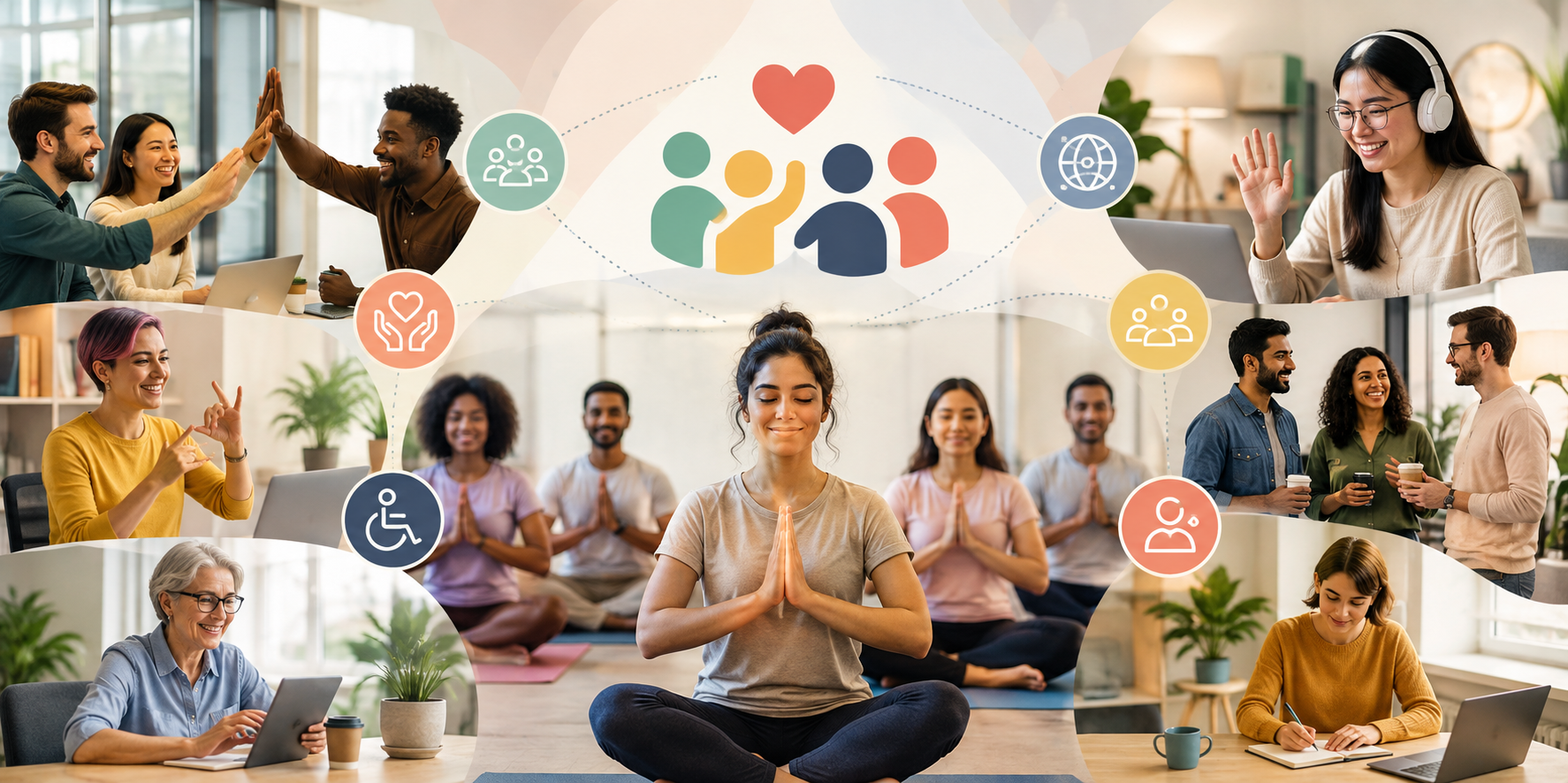
How to Make Employee Engagement Activities Work for Everyone
Learn practical ways to design inclusive employee engagement activities that work for hybrid, remote, and diverse teams, with help from ICE.
A workforce today is rarely uniform. It spans different generations, work arrangements, physical abilities, cultural backgrounds, and personal interests, and yet many engagement activities are still designed around a single, narrow assumption of what employees want. Making engagement activities genuinely work for everyone requires HR to move beyond a one-size-fits-all calendar and toward deliberate, inclusive design that considers the full range of people the organization actually employs.
Start with Variety, Not Uniformity
The single most effective shift HR can make is building variety into the engagement calendar rather than repeating the same one or two activity types throughout the year. This means balancing high-energy physical activities with quieter, low-intensity options; balancing group-based events with activities that also work for more introverted employees; and balancing in-person experiences with virtual or hybrid-friendly formats. No single activity will appeal to everyone, but a well-rounded calendar ensures that most employees find something genuinely relevant to them across the year, rather than feeling engagement activities simply aren't designed with them in mind.
Design for Hybrid and Remote Employees from the Start
Too often, remote and hybrid employees are treated as an afterthought, added to an in-person activity through a video call that leaves them passively watching rather than genuinely participating. Truly inclusive engagement design starts with the assumption that not everyone is in the same room, and builds activities that work natively for distributed teams: virtual wellness challenges, digital recognition moments visible company-wide, and hybrid event formats where remote participation is a first-class experience rather than a compromise.
This is particularly important for ICE's core philosophy of building connected workplaces; genuine connection has to reach every employee regardless of where they're physically working from, not just the segment of the workforce that happens to be in the office that day.
Offer Genuine Choice, Not Forced Uniformity
Mandatory, identical participation tends to alienate at least some portion of any workforce. Instead, offering a menu of options, letting employees choose between two or three parallel activities in a given cycle, respects the reality that people have different preferences, energy levels, and comfort zones. This doesn't require significantly more resources; it simply requires planning activities with optionality built in from the start rather than defaulting to a single mandatory format for the entire organization.
Account for Accessibility and Life Circumstances
Inclusive design means actively considering employees with physical limitations, caregiving responsibilities, religious or cultural observances, and varying comfort levels with public participation. This might mean offering both a high-intensity and low-intensity version of a wellness activity, scheduling events with enough flexibility to accommodate different shifts or time zones, and ensuring recognition moments don't require public performance from employees who would rather be acknowledged more privately. Small adjustments like these dramatically widen the pool of employees who can genuinely participate rather than simply being invited.
Connect Activities to Real Employee Interests
Gathering direct input, through short surveys, informal suggestion channels, or periodic check-ins, on what kinds of activities employees actually want is one of the simplest ways to improve inclusivity. HR teams often plan calendars based on what worked in the past or what leadership assumes employees enjoy, without directly validating those assumptions against the current workforce. A few minutes of structured feedback collection can reveal significant gaps between what's being planned and what would genuinely resonate.
Reinforce Activities with Recognition That Also Feels Inclusive
Inclusivity shouldn't stop at the activity itself; it should extend into how participation and contribution are recognized afterward. Recognition that only highlights the loudest or most visible participants can undermine the inclusive intent of the activity itself. Building varied, layered recognition, acknowledging effort and participation broadly rather than only celebrating a handful of standout moments, ensures that every employee who engaged, in whatever way suited them, feels genuinely seen.
Avoiding Tokenism in Inclusive Design
There's an important distinction between genuine inclusivity and a token gesture, adding a single alternative option to an otherwise unchanged activity calendar and calling it inclusive. Employees notice the difference. Genuine inclusive design means the alternative options are given equal visibility and equal enthusiasm in communication, not buried as an afterthought beneath the main event. It also means gathering feedback specifically from employees who historically haven't participated, rather than assuming their silence means disinterest rather than a mismatch between what's offered and what they need.
Over time, this deeper commitment to inclusive design pays off in ways beyond attendance numbers. Employees across every demographic and work arrangement begin to trust that engagement efforts are genuinely built with them in mind, which itself becomes a form of the connection and recognition that inclusive activities are meant to create in the first place.
Letting Employees Help Shape the Calendar
One of the simplest ways to sustain inclusive design over time is to involve employees directly in planning, whether through a rotating engagement committee, an open suggestion channel, or periodic voting on upcoming activity themes. This does more than generate good ideas; it distributes ownership of the engagement calendar beyond HR alone, which naturally builds in a wider range of perspectives on what would genuinely work for different segments of the workforce than any single planning team could anticipate on its own.
The Long-Term Payoff
When engagement activities are designed with genuine inclusivity in mind, participation rates rise, feedback improves, and the sense of belonging spreads more evenly across the organization rather than concentrating among a visible few. This is exactly the kind of holistic, people-first thinking behind ICE's approach to workplace engagement: activities that work for everyone, not just the employees who were easiest to design for.
It's also worth remembering that inclusive design is not a one-time project with a finish line. Workforces change; new employees join with different needs and preferences, existing employees move through different life stages, and what felt inclusive two years ago may quietly leave newer segments of the workforce underserved today. Building a regular cadence of feedback collection and calendar review into HR's routine ensures that inclusivity keeps pace with how the organization itself evolves, rather than becoming another well-intentioned initiative that gradually drifts back toward a one-size-fits-all default.
The organizations that get this right tend to see a compounding effect over time: as more employees feel genuinely considered in how activities are designed, participation grows organically, feedback becomes more constructive, and the engagement calendar itself becomes a source of pride rather than an obligation. That shift, from engagement activities being something HR does to employees, to something built together with them, is ultimately what makes engagement work for everyone, regardless of role, location, or personal preference.