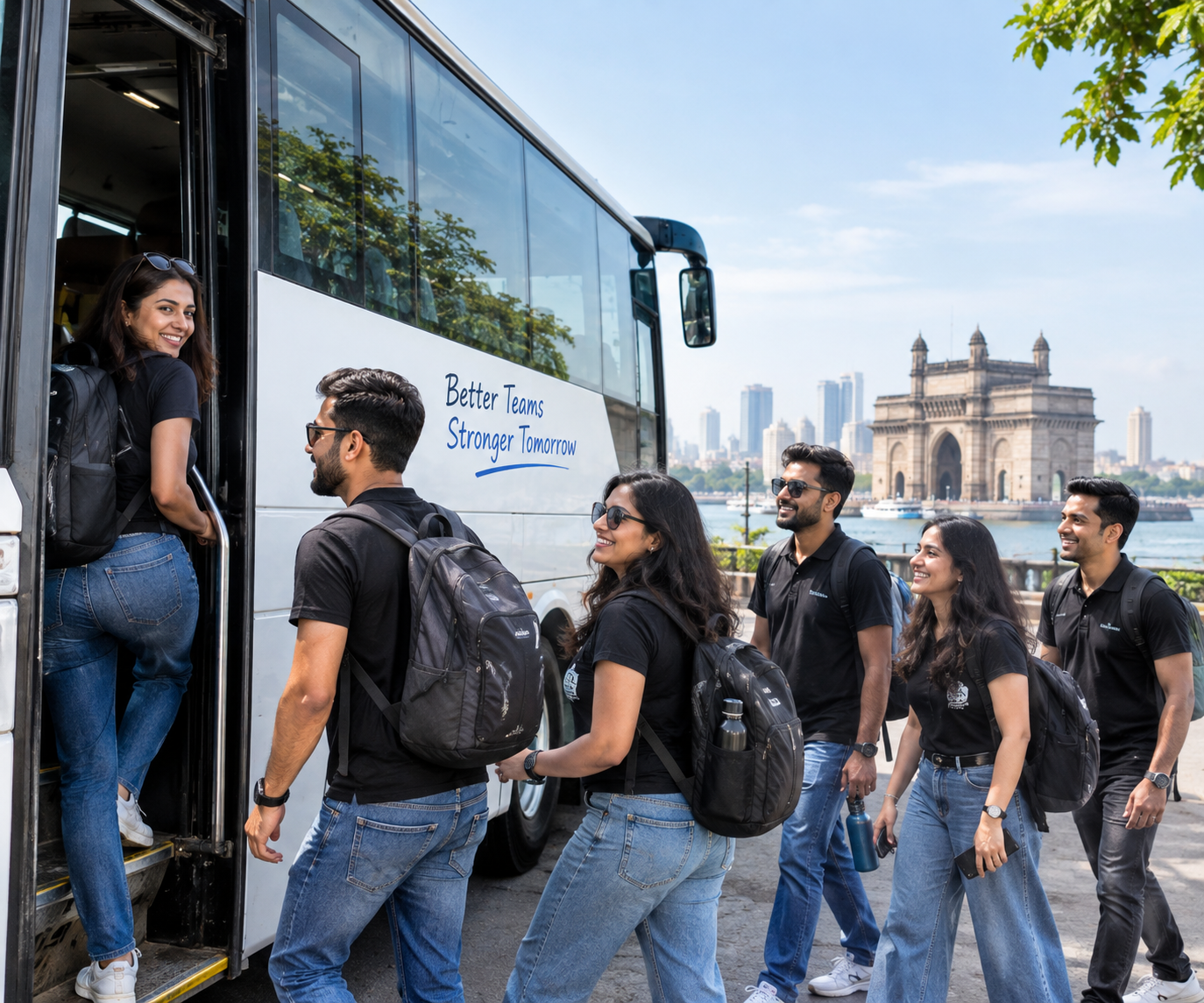
Corporate Team Outings in Mumbai: Destinations, Season Guide, Safety and a Planning Timeline
Planning corporate team outings in Mumbai? Day trip and overnight options, season guide, safety, budget and a timeline HR can follow.
A team outing sounds simple: pick a place, book a bus, bring snacks. In Mumbai, it rarely is. Traffic can turn a one-hour drive into three, the monsoon changes what is safe, venues book out for December weekends and a single missed headcount can ruin a day. Corporate team outings in Mumbai go well when someone has thought through destinations, season, transport, safety and food before the invitation goes out.
This guide covers where to go, when to go, how to keep people safe and a timeline you can follow. For activity ideas to run on the day, see our list of team building activities for employees in Mumbai.
Decide the Purpose First
An outing can celebrate a milestone, reward a hard quarter, build a new team, or give everyone a break. The purpose decides the length, the place and the budget. A pure reward day can be relaxed. A team-building outing needs structured activities and a debrief. Research on team building, including a meta-analysis in Small Group Research, found positive effects on trust and cohesion when activities are chosen for a purpose.
Choose the Type of Outing
Half-day outing. Three to five hours within Mumbai. Easy to organise, with little travel.
Full-day outing. Eight to twelve hours, within or just outside the city.
Overnight outing or offsite. One or two nights, usually at a resort, with sessions and free time.
Weekend outing. Includes families, and needs more planning around personal commitments.
Hybrid outing. A shared activity on an anchor day, with a virtual option for remote staff.
Destination Ideas
These are commonly used options. Check current access, timings, ferry schedules, entry fees and permissions before you commit, since conditions change.
Within Mumbai
Sanjay Gandhi National Park, Borivali. Nature trails and a green setting, good for walks and group tasks. Check entry rules and permissions.
Beaches and seaside promenades. Good for a relaxed evening, with attention to safety, tides and crowds. Avoid swimming.
Heritage areas in South Mumbai. A guided walk through historic districts followed by a meal.
Elephanta Caves. A ferry from Gateway of India to a heritage site. Ferry timings and conditions vary, and water transport is often restricted in the monsoon.
Cafés, event spaces and clubs. Good for half-day outings, with private rooms and activities such as cooking or art workshops.
Sports venues. Box cricket turfs, bowling alleys and indoor sports complexes, which work in any weather.
Within a few hours of Mumbai
Alibaug. A coastal option, reached by road or by ferry. Ferry schedules and monsoon restrictions apply.
Karjat. Resorts, outdoor activities and nature, popular for day trips and offsites.
Lonavala and Khandala. Hill-station resorts popular for team days. In the monsoon, authorities sometimes restrict access to waterfalls and viewpoints for safety.
Khopoli. Theme-park and resort options for a fun day.
Matheran. A vehicle-free hill station, reached by a short walk or the toy train from the base. Suitable for a different, slower outing, with attention to accessibility.
Kamshet and similar spots. Adventure activities, with strict safety checks.
I have not quoted travel times, because they vary with traffic. Allow generous buffers, especially for weekend departures and returns.
Pick the Right Season
October to February. The most comfortable window, and the busiest for venues. Book early, especially for December.
March to May. Heat and humidity. Choose early-morning or evening activities, shaded venues and plenty of water.
June to September. Monsoon. Outdoor plans carry safety risks, including waterlogging, landslides and restricted sites. Choose indoor venues and keep a backup plan. Avoid water-based activities in heavy rain.
Festival clashes. Diwali, Ganeshotsav and Navratri affect personal plans and traffic, so check dates before you fix yours.
Work pressure. Avoid month-end, quarter-end and financial year-end in March.
Transport and Logistics
Use licensed operators with well-maintained vehicles and experienced drivers. Check the vehicle’s fitness papers and the driver’s licence. Plan driver rest and avoid late-night driving. Assign a coordinator for each vehicle and keep a headcount at every stop. Share the schedule, pickup points and emergency contacts in advance. Plan pickups from several locations across the city if teams are spread out. Provide safe transport home, especially after evening events. Allow buffers for traffic, and agree what happens if someone is late.
Safety, Insurance and Health
Brief everyone on the day’s plan and safety rules. Ask participants to self-declare medical conditions, and make clear no one has to take part in any activity. Provide first aid, water and shade, and know the nearest hospital. For adventure or water activities, use qualified operators, life jackets and clear instructions, and consider insurance for the day. Check your existing cover, and ask your insurer or broker about group accident cover. Check the resort’s fire safety and emergency arrangements. Keep a list of attendees and emergency contacts. If alcohol is involved at all, keep it optional, limited and away from physical activities, and many companies choose alcohol-free outings. Speak to your legal counsel about any waivers.
Make It Inclusive
Offer activities at different intensities. Provide food for vegetarian, Jain and allergy needs. Check accessibility for people with limited mobility. Hold outings during working hours where possible so caregivers can join. Include security, housekeeping and contract staff. Offer a separate, shorter event for shift staff and a virtual option for remote employees. Avoid forcing participation, dress codes or late-night programmes.
Budget the Outing
Typical lines include transport, venue or resort, food and water, activities and facilitators, insurance, first aid, photography, signage, prizes and a contingency. Allow around ten per cent for the unexpected. Costs vary widely with season and destination, and December is the most expensive period. Get itemised quotes from at least three venues or vendors, and check what is included. Spend where it improves the experience for the most people.
Use Vendors Wisely
Decide what to run yourself and what to outsource. Day outings are often manageable in-house. Offsites and adventure outings benefit from an experienced operator. Ask for references from similar groups, itemised quotes, safety certifications, insurance, the person who will run the day, the backup plan for bad weather and cancellation terms. Visit the venue or speak to a past client.
An Eight-Week Timeline
Weeks 8 to 7. Set purpose, budget, group size and a date range. Get approval.
Weeks 6 to 5. Shortlist and book the destination and transport. Confirm permissions.
Week 4. Announce the outing with date, schedule and what to expect. Open sign-up and collect dietary and medical information.
Week 3. Finalise activities, catering and insurance. Brief managers.
Week 2. Share the final itinerary, pickup points and emergency contacts. Assign vehicle coordinators.
Week 1. Check the weather outlook, confirm numbers and send reminders.
Outing day. Arrive early, take headcounts at every stop, keep to time and look after people.
After. Thank people, share photos, collect feedback and review costs and learning. Book next year’s venue early if it went well.
Make the Day Mean Something
Include a short, structured activity with a purpose, not only free time. Keep speeches short. Mix teams, so people meet colleagues they do not usually see. Recognise a few people by name. And run a ten-minute debrief that connects the day to work.
Measure Success
Look at sign-up and attendance, how many people from different teams mixed, feedback on organisation, safety and fun, incidents and near-misses, cost per head and what people say in the weeks afterwards. A good outing leaves people with stories and better working relationships.
Common Mistakes
The most common mistake is underestimating Mumbai traffic. The second is ignoring the monsoon. The third is booking late for December. The fourth is skipping safety, insurance and headcounts. The fifth is a programme with no purpose and long speeches. The sixth is excluding people who cannot travel or take part. The seventh is treating it as a one-off with no follow-up.
How ICE Can Help
If your team lacks time, ICE’s Connect pillar builds team outings and shared experiences into a year-round engagement calendar. Inform supports clear announcements and updates, and Reward adds dining, fitness and travel privileges. For transport, resort and adventure operations, you may need a specialist vendor, and ICE can help you plan the engagement around it. For related reading, see how to make employee engagement activities work for everyone. To plan corporate team outings in Mumbai for your team, contact ICE.
Follow ICE on LinkedIn, Instagram, Facebook, and YouTube for more HR and engagement resources.