Employee Benefits Platform in Mumbai: A Buyer’s Checklist for HR Teams
Choosing an employee benefits platform in Mumbai? Features to demand, how to evaluate vendors, integration, pricing models and adoption.
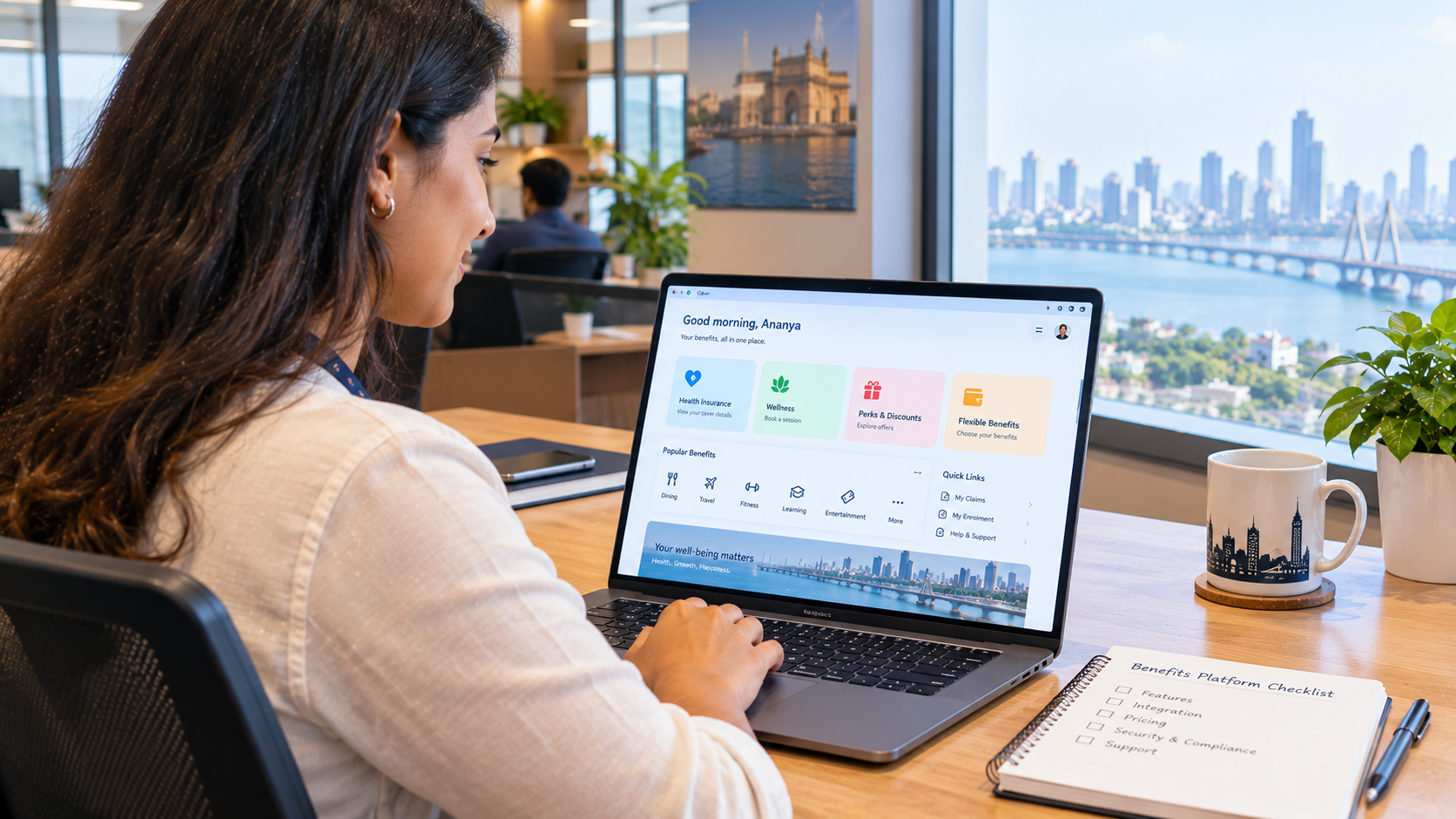
Most HR teams start looking for an employee benefits platform in Mumbai because of one frustration: benefits exist, but nobody can find them, claim them or understand them. Insurance details sit in a PDF, reimbursements travel by email, perks live on a separate site and HR answers the same questions every week. A good platform pulls this into one place. A poor one becomes another login nobody remembers.
This checklist explains what a benefits platform does, which features matter, how to evaluate vendors and what to ask before you sign. For the wider benefits picture, see our guide to corporate employee benefits in Mumbai.
What Is an Employee Benefits Platform?
An employee benefits platform is a digital portal where employees see, choose, claim and use their benefits, and where HR manages them. Depending on the product, it can cover insurance enrolment, flexible benefits plans with a spending budget, reimbursements, perks and discounts, wellness services and communication about all of these.
Platforms differ widely. Some focus on administration (enrolment, claims and records). Others focus on experience (discounts, rewards and engagement). Know which problem you are solving before you compare products.
Why the Platform Is Rarely the Real Problem
Platforms fail for reasons that have nothing to do with software. A benefits report found 73% of employees want more education on the benefits they already have, and a Glassdoor survey found that 79% of employees would prefer new or additional benefits over a straight pay increase. Employees want benefits and do not understand the ones they have. A platform helps only if it makes benefits easy to find and use, and only if the company communicates about it well.
Features to Demand
Clear benefits catalogue
Every benefit explained in plain language, with eligibility, how to use it and who to contact. If employees cannot understand a benefit in under a minute, they will not use it.
Mobile-first access
Many employees will open it on a phone, often in transit. Check that it works well on basic smartphones, and does not need a company laptop.
Easy enrolment and claims
Insurance enrolment, dependent addition, claim submission and tracking in a few steps. Ask for a live demo of the whole claim journey.
Flexible benefits and wallets
If you want employees to choose within a budget, check how the platform handles budgets, choices, approvals and balances. Because India’s new wage definition can treat large allowances as wages, ask payroll and legal how flexible components are structured. The four labour codes came into force on 21 November 2025, introducing a single wage definition with a 50 per cent rule, so confirm with legal counsel before designing flexible pay.
Perks, discounts and rewards
Relevant offers near where Mumbai employees live and work: dining, fitness, travel, health and daily services. Ask to see the live partner list for your locations, not a global logo slide.
Wellness and health services
Access to screening, counselling and consultations, or links to your providers.
Communication tools
Announcements, reminders and campaigns, so benefits get talked about at the right moments, such as before the monsoon or at open enrolment.
Reporting for HR
Usage by benefit, team and location, with anonymised data. You should be able to see what is used and what is not.
Multilingual and accessible design
Support for the languages your workforce uses, simple wording and accessibility options.
Support
A helpdesk or named contact, with clear response times, so employees do not default to asking HR.
Integration and Data
Ask how the platform connects to your HR system and payroll: single sign-on, automatic employee list updates, joiner and leaver changes and payroll deductions where relevant. Poor integration means HR re-enters data by hand, which defeats the purpose.
Employee data on these platforms is personal and sometimes sensitive. Ask where data is stored, who can see it, how long it is kept, what happens when you leave the vendor and how breaches are handled. The government notified the DPDP Rules in November 2025 with an 18-month phased timeline, including clear consent notices, so ask your legal counsel which obligations apply, and check the vendor’s own security practices.
Build, Buy or Use a Managed Service
Build. Possible for very large companies with technical teams, but slow and expensive to maintain.
Buy a platform. The usual route. You get a ready product, and you do the rollout and communication yourself.
Use a managed service. A provider combines the platform with people who run the benefits calendar, communication and partner network. This suits teams without spare capacity.
Choose based on how much HR time you have, not just on the product.
Pricing Models
Providers price in different ways: per employee per month or year, a flat annual fee, tiered by headcount, a setup fee plus subscription or partly funded by partner offers. I haven’t quoted rupee figures because they vary widely by scope. Ask for itemised quotes on the same brief, and check what is included, such as support, integration, communication and reporting, and what costs extra. Ask how pricing changes as your headcount grows, and how long the contract runs.
How to Evaluate Vendors
Define the problem first. For example, low benefits awareness, slow claims, scattered perks or no usage data.
Write a short requirements list. Split it into must-haves and nice-to-haves.
Ask for a live demo using your scenario, such as a new joiner enrolling dependents or a shift worker claiming a reimbursement.
Test it on a phone yourself.
Speak to a customer of similar size in Mumbai, ideally someone who has been live for at least a year.
Check the partner network near your offices.
Run a pilot with one team or location before a company-wide launch.
Ask about the exit. How do you get your data and content back?
A 90-Day Rollout Plan
Days 1 to 30. Agree the problem and measures, name an owner, set up integration and data, load the benefits catalogue and write simple explanations.
Days 31 to 60. Pilot with one team or location. Gather feedback weekly, and fix confusing steps.
Days 61 to 90. Launch to everyone with a clear message, brief managers and add the platform to onboarding. Review usage and feedback.
Drive Adoption
Launch with a short, clear message on what it is and what is in it for employees. Brief managers. Share one highlight a month. Put QR codes where people see them. Add it to onboarding. Show early examples of people using it. For frontline staff, make sure they can use it without a company email or laptop, or provide a supervisor-led alternative.
Measure Success
Track activation (employees who have logged in), monthly active users, benefits used by category, claim turnaround time, HR queries about benefits and employee feedback. Compare usage by team and shift to find who is being missed. Review quarterly, and expect adoption to build over several months.
Common Mistakes
The most common mistake is buying a platform before defining the problem. The second is choosing on features and not on how employees will actually use it. The third is ignoring integration with HR and payroll. The fourth is launching without communication or manager briefings. The fifth is forgetting frontline and shift staff. The sixth is skipping the data and exit questions. The seventh is expecting software to fix a benefits package that employees do not value.
Where ICE Fits
A platform works best with a benefits package people value and communication that keeps them aware of it. ICE’s Reward pillar covers dining, fitness and travel privileges, Inform supports clear, repeated communication about benefits and Connect builds the wellness and engagement experiences that sit alongside them. If you are weighing an employee benefits platform in Mumbai and want to know what is worth including in it, get in touch with ICE. For related reading, see where HR should start when employee engagement is low.
Follow ICE on LinkedIn, Instagram, Facebook, and YouTube for more HR and engagement resources.