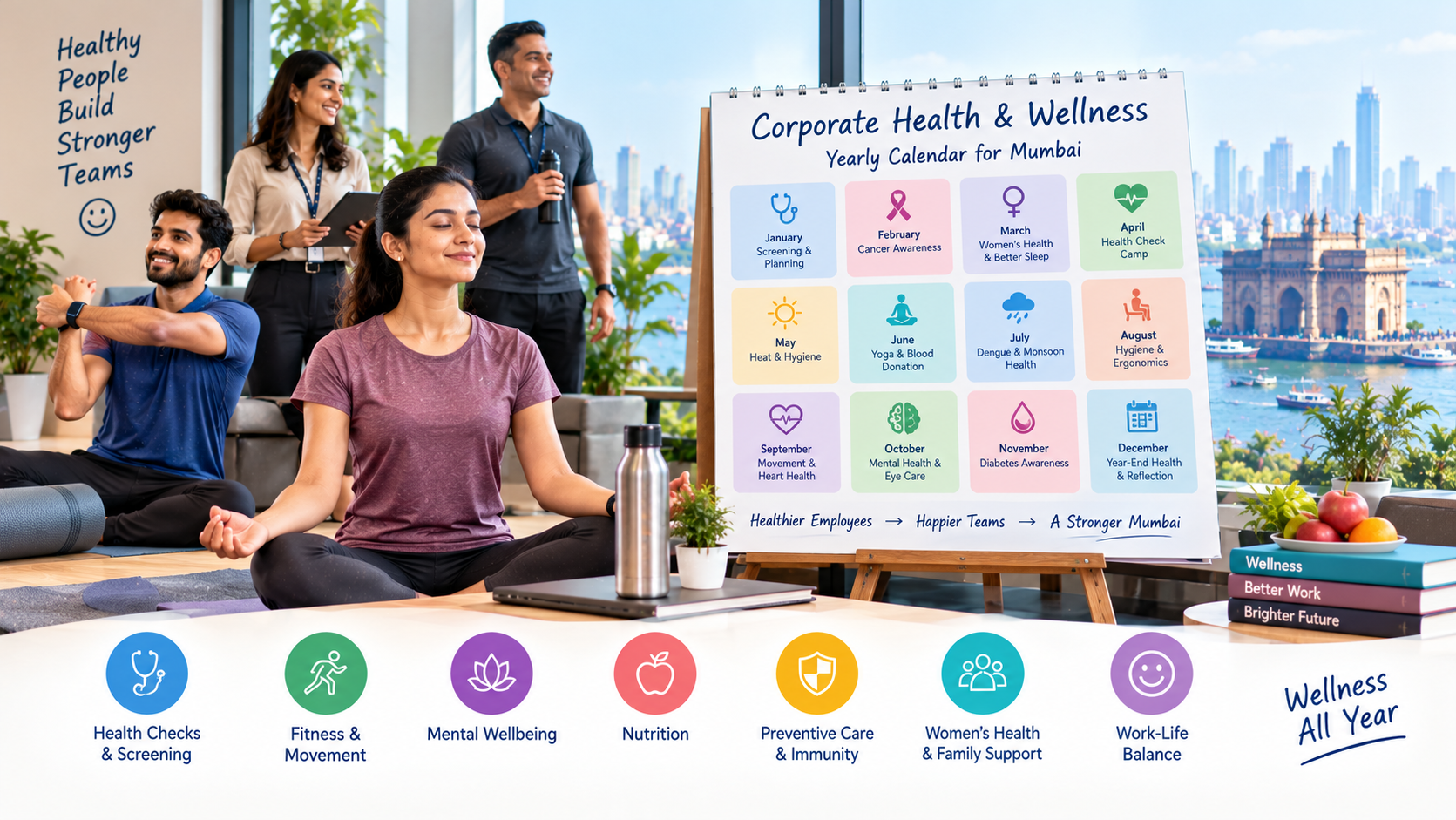
Corporate Health and Wellness in Mumbai: A Month-by-Month Calendar for the Year
Most wellness plans are a list of ideas with no sense of timing. Corporate health and wellness in Mumbai works much better when the calendar follows the year the city actually has: a hot spring, a heavy monsoon, a long festive season and a year-end rush. Each part of the year brings different health needs, and a plan that reflects them feels useful, not generic.
This guide gives you a month-by-month calendar you can adapt. It mixes health awareness days with Mumbai’s seasons, and keeps each month light enough to run alongside normal work.
Principles Behind the Calendar
Keep it small. One main theme per month, one or two activities and one clear message. Hold sessions during working hours. Use a mix of formats: short talks, screening, movement sessions and simple messages. Involve a qualified doctor, psychologist, physiotherapist or dietitian for anything clinical. Make everything voluntary, protect privacy and track how many people take part.
January: Baseline and Planning
Start the year by reviewing last year in aggregate: which services were used, what sick-leave patterns looked like and what employees asked for. Never review individual health data. Book the year’s main screening camp and send a short plain-language explainer about health insurance, so people know what they are covered for. A gentle movement challenge helps people begin the year, as the WHO’s guidelines on physical activity and sedentary behaviour recognise prolonged sitting as a health risk and recommend regular movement.
February: Awareness Sessions
World Cancer Day falls on 4 February. A doctor-led awareness session on early warning signs and routine screening, with no individual testing at the session, is a useful, low-cost activity. Pair it with a reminder about what your insurance covers.
March: Women’s Health, Sleep and Financial Year-End
International Women’s Day on 8 March is a good moment for a women’s health awareness session, handled sensitively and optionally. March also brings World Sleep Day, a good chance for a short session on sleep and fatigue, which matters for long commuters and shift workers. And because the financial year ends on 31 March, many teams are under pressure, so add a short stress-management session or a manager reminder to protect recovery time.
April: Health Check Season
World Health Day is on 7 April. This is a good moment to run your main screening camp, with a plan for follow-up consultations. For practical tips on running one, see the guide to planning a corporate health camp. As Mumbai heats up, share hydration advice and remind teams about taking breaks.
May: Heat and Pre-Monsoon Preparation
Share guidance on heat, hydration and safe commuting. World Hand Hygiene Day on 5 May is a natural hook for a hygiene message ahead of the monsoon. Send a pre-monsoon note covering what to do if you have a persistent fever, the company’s sick-leave and flexible-work approach during heavy rain and where to find help.
June: Monsoon Starts, Yoga Day and Blood Donation
International Day of Yoga on 21 June suits a short, optional yoga or stretching session indoors. World Blood Donor Day on 14 June is the time for a blood donation drive, but it must be run with a licensed blood bank. As the rains start, reinforce the plan: sick employees stay home, remote work during flooding and fast communication when disruption hits.
July: Peak Monsoon Health
Based on BMC figures reported in 2025, dengue, chikungunya and malaria cases in Mumbai rose significantly across the monsoon period compared with the previous year, although the report notes some of the increase reflected more testing. July is the month to repeat advisories, keep offices clean and well drained, and make it easy to see a doctor. Hold sessions indoors, such as posture and ergonomics workshops.
August: Hygiene, Ergonomics and Festival Preparation
Continue monsoon advice. Run an ergonomics and eye-strain session. Ganeshotsav usually falls in late August or September, so remind people about safe travel in crowded periods, and be flexible about hours around key festival days.
September: Movement and Heart Health
World Physiotherapy Day is on 8 September, a good moment for posture and mobility sessions with a physiotherapist. World Heart Day on 29 September suits a heart-health awareness session covering blood pressure, cholesterol and lifestyle. Pair it with basic health checks if you have a camp planned.
October: Mental Health, Eye Health and Festive Season
World Mental Health Day is on 10 October. NIMHANS survey data reported by the government found mental disorder prevalence was nearly twice as high in urban metro regions as in rural areas, so this is a key month to remind people of confidential counselling and train managers to point people to support. World Sight Day, in the second week of October, suits an eye-health message for screen-heavy teams. As Diwali approaches, share simple tips for staying well through a busy festive period.
November: Diabetes Awareness and Festive Balance
World Diabetes Day on 14 November is a good moment for a blood sugar awareness session, especially after Diwali sweets. Offer balanced snack options at office events and a short nutrition talk.
December: Year-End Recovery and Planning
Year-end brings fatigue. Run a burnout and recovery check-in, encourage people to use their leave and offer an opt-in seasonal vaccination drive where appropriate. Review the year, look at which activities were used most and plan the next calendar.
How to Run the Calendar
Name an owner, ideally in HR, and a small group of volunteers across teams. Agree the year’s themes in January and publish them so people know what is coming. Brief managers each month with one short message. Offer sessions at more than one time, and record talks where the speaker agrees. Include hybrid, shift and frontline staff in every activity.
How to Measure It
Track participation by activity, repeat attendance across the year, use of follow-up services such as counselling and physiotherapy and employee feedback. Review sick-leave patterns around the monsoon in aggregate to see whether people feel safe staying home. Ask whether employees know what support exists, since awareness is often the weakest link.
Common Mistakes
The most common mistake is running one big wellness week and nothing else. The second is ignoring Mumbai’s seasons, especially the monsoon. The third is relying on awareness days with no follow-up services. The fourth is making sessions mandatory. The fifth is forgetting shift and hybrid staff. The sixth is treating the calendar as a replacement for reasonable workloads and trained managers.
Building the Calendar With ICE
ICE’s Health & Wellness offering brings together 18 ready-to-deploy services, including preventive screening, psychologist-led sessions, physiotherapy and specialist consultations, that can be scheduled across a year-round calendar. Inform helps deliver seasonal advisories and reminders clearly, and Reward adds fitness and dining privileges. For related reading, see what a corporate wellness program should actually include and how corporate health and wellness programs support employee productivity. To plan corporate health and wellness in Mumbai across your whole year, get in touch with ICE.
Follow ICE on LinkedIn, Instagram, Facebook, and YouTube for more HR and wellness resources.