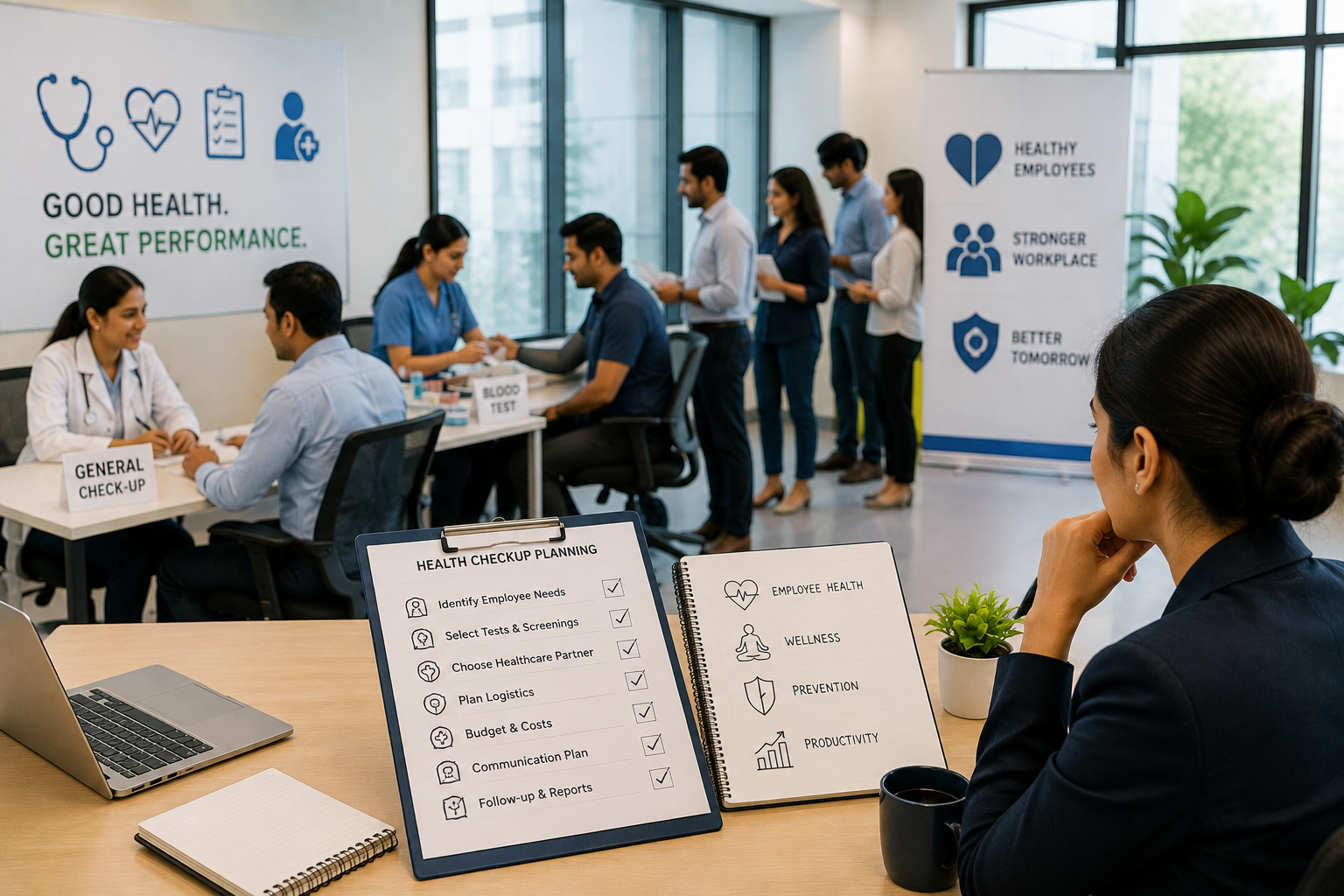
What HR Should Know Before Organizing a Corporate Health Checkup
A corporate health checkup involves more than picking a diagnostic vendor. Here's what HR should think through before locking in the plan.
Organizing a corporate health checkup often gets treated as a procurement task, get quotes, compare packages, book the one that fits the budget. This approach usually produces a checkup drive that technically happens but doesn't do much for either the employees or the organization. Before locking in a vendor, there are a few things HR needs to think through that have far more impact on the outcome than the price per package.
Know Why You're Running the Checkup
A health checkup run because "it's that time of year" tends to look very different from one built around an actual need. If absenteeism has been climbing, if insurance claims data points to a specific issue, or if the workforce skews toward an age group where certain screenings matter more, that context should shape the checkup, not just a generic annual package. Without this clarity, HR often ends up paying for a broad package that doesn't actually address what the organization needs to know about its own workforce.
Understand What a Package Actually Includes
Checkup packages can look similar on paper while varying significantly in what they actually test for and how the results are delivered. Before signing off, HR should ask specific questions, does the package include a consultation to explain results, or just a printed report? Is the panel of tests appropriate for a working-age population, or a generic checkup not designed with any workforce in mind? Understanding this detail upfront avoids the common gap between what was purchased and what employees actually experience on the day.
Think Through Data Privacy Before Anyone Asks
Health data is personal, and employees are far more likely to participate honestly and fully if they trust their results won't end up visible to managers or tied to their employee file. HR should have a clear answer ready, before the checkup is even announced, on where individual reports go, how aggregated data will be used, and whether participation has any bearing on internal records. This isn't just a compliance detail, it directly affects how much employees trust the process enough to actually engage with it.
Plan for the Time It Actually Takes
A checkup that looks like a thirty-minute commitment on the vendor's brochure can easily stretch into an hour once queues, paperwork, and consultation time are factored in. Underestimating this leads to frustrated employees and rushed screenings that don't serve anyone well. Building in pre-booked slots and realistic time estimates upfront, rather than assuming a smooth walk-in flow, tends to make the actual day run far more smoothly.
Decide How Results Will Be Followed Up On
A checkup that ends the moment the last employee walks out tends to lose most of its value. HR should decide in advance what happens if someone is flagged for a concerning result, is there a referral pathway, a point of contact, some support beyond just handing over a report? This kind of follow-through is often what separates a checkup that genuinely helps employees from one that's forgotten a week later. It also connects closely to how the organization approaches broader employee wellness programs over time, a checkup works best as one part of a larger wellness effort, not an isolated event.
Communicate the "Why," Not Just the Logistics
Employees are more likely to participate when they understand the reasoning behind a checkup, not just the time and location. A short note explaining why the organization is running it, what it covers, and reassurance around privacy tends to drive far better turnout than a purely logistical announcement. This is also a useful moment to reinforce it as part of the organization's ongoing approach to employee wellbeing and engagement, rather than a standalone HR initiative that appears once and disappears.
Set Expectations for What Happens With the Data
Beyond individual results, HR should think about what aggregated, anonymized findings will actually be used for. Sharing high-level trends with leadership can shape future benefits decisions or wellness priorities, but only if this is planned for in advance rather than treated as an afterthought once the checkup is already done.
Final Thoughts
A corporate health checkup delivers real value when it's planned with intent, clear reasoning, transparent privacy practices, realistic logistics, and a plan for what happens after the results come in. HR teams that think through these details upfront tend to run checkups employees actually trust and participate in, rather than ones that get quietly tolerated once a year.
If you're ready to plan a health checkup that's part of a larger wellness strategy, explore ICE's full range of services or learn more about our approach to supporting stronger workplaces.