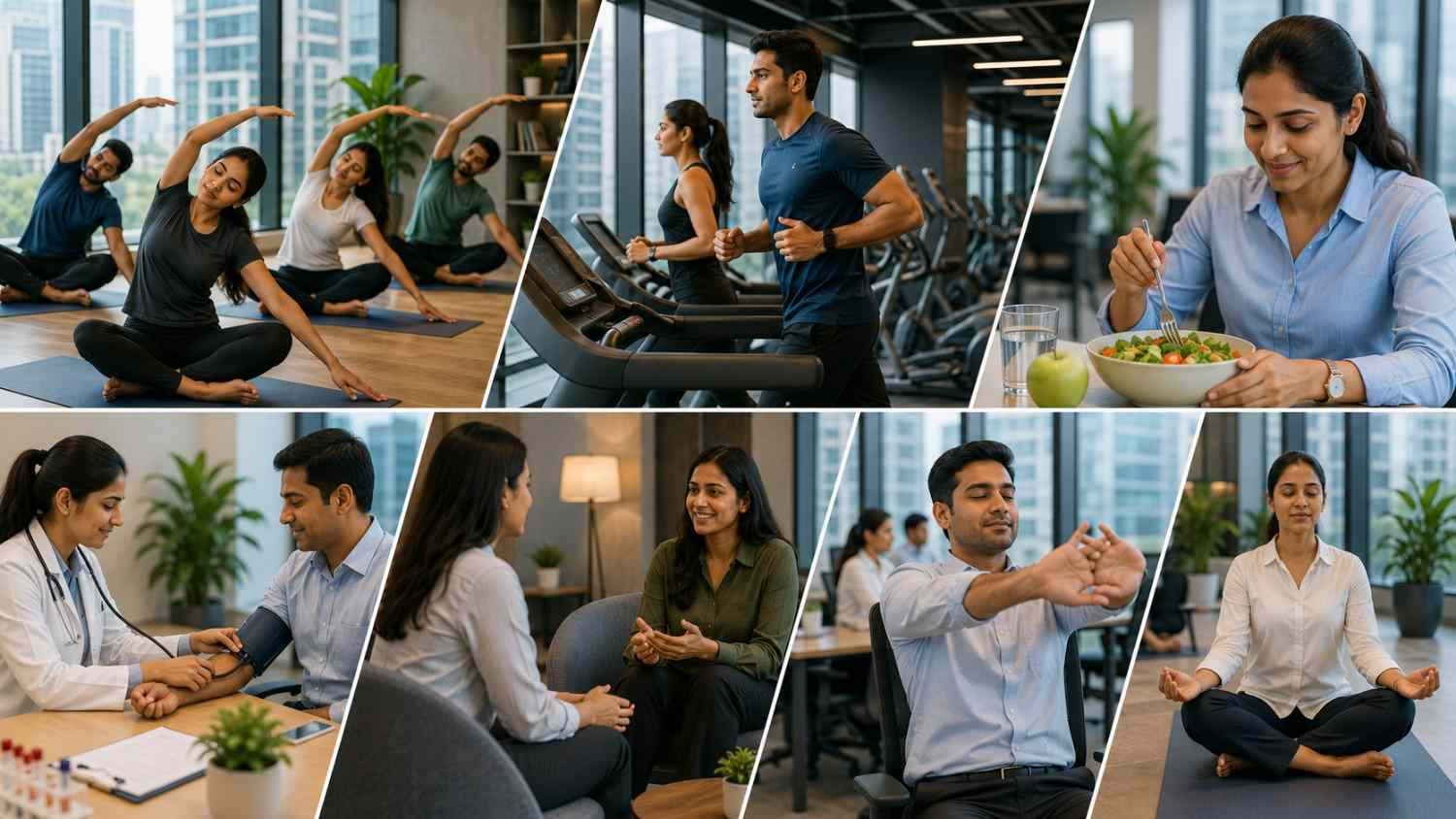
Wellness Program Ideas for Corporate Offices in Lower Parel
Searching for wellness program ideas in Lower Parel? Here's what actually works for corporate offices in this business district, and why.
Lower Parel occupies an interesting middle ground among Mumbai's business districts. Its corporate towers, built largely on former mill land, sit inside one of the city's densest lifestyle ecosystems, boutique gyms, wellness studios, and cafes are often just a short walk away, which is a genuine advantage most business hubs don't have. At the same time, the workforce here spans media, retail, fashion, and corporate headquarters, many with long, high-pressure hours and limited in-office space for wellness infrastructure. Wellness program ideas for Lower Parel offices work best when they lean into that neighbourhood density rather than trying to replicate everything on-site.
This piece walks through wellness ideas that genuinely fit a Lower Parel workforce, along with what tends to go wrong when companies default to a generic program instead.
Why Lower Parel's Wellness Needs Are Different
Office space in Lower Parel's towers is used efficiently, which usually means there's no room for a dedicated on-site gym or wellness centre. But unlike more isolated business districts, Lower Parel's surrounding neighbourhood is packed with fitness studios, clinics, and wellness providers within a short walking distance, an asset that can be built into a program directly rather than ignored. The sectors concentrated here, media, retail, and corporate offices, also often run on tight deadlines and irregular hours, which makes flexibility in scheduling wellness activities especially important.
Wellness Program Ideas That Work for Lower Parel Offices
1. Subsidised access to nearby fitness studios
Rather than building on-site fitness infrastructure, partnering with the boutique gyms and studios already dense in Lower Parel gives employees real variety, yoga, strength training, dance-based fitness, without the company needing to manage any of it directly.
2. On-site preventive health screenings
Short, scheduled screening camps, held in a meeting room or common area for a few hours, work well for teams that can't easily step out during the day. Basic diagnostics, eye checks, and dental screenings tend to see strong turnout when they don't require leaving the building.
3. Confidential mental health counselling
Given the high-pressure, deadline-driven nature of media and retail work concentrated in this district, accessible and genuinely confidential counselling support is one of the highest-value additions a wellness program can make.
4. Physiotherapy and posture support
For desk-bound teams working long hours, on-site or scheduled physiotherapy sessions address a very real, common source of physical strain that otherwise goes unaddressed until it becomes chronic.
5. Nutrition workshops built around irregular schedules
Given how common late nights and irregular hours are in media and retail specifically, nutrition guidance that acknowledges real schedules, rather than assuming a standard 9-to-6 day, tends to be far more useful than generic healthy-eating advice.
6. Short guided movement breaks during the workday
Ten to fifteen-minute guided stretching or mindfulness sessions scheduled directly into the workday tend to get better participation than anything expected to happen before or after office hours.
7. Wellness challenges with real incentives
Step-count challenges, hydration trackers, or simple monthly wellness goals, tied to small, meaningful incentives, work well as a lightweight way to keep wellness visible between larger initiatives.
Common Wellness Program Mistakes in Lower Parel Offices
The most common mistake is trying to replicate a full on-site wellness centre in a space that simply wasn't built for it, when partnering with the neighbourhood's existing fitness ecosystem would serve employees better for less effort.
The second mistake is scheduling everything for after work hours, which consistently underperforms in a district known for long, unpredictable schedules.
The third mistake is treating mental health as optional or an afterthought, despite it being one of the areas where this specific workforce likely needs support the most.
How Do You Know If a Wellness Program Is Working in Lower Parel?
Track whether employees continue using services that require ongoing opt-in, subsidised gym access, counselling, physiotherapy, well past the initial rollout period, since sustained voluntary use is a far stronger signal than attendance at a single launch event. The World Health Organization's guidance on mental health at work notes that workplace conditions and workload directly affect employee mental health, which is a useful reminder that wellness outcomes should be tracked alongside, not separately from, workload and scheduling patterns.
When to Bring in a Wellness Partner
Coordinating with multiple local fitness studios, clinical practitioners, and counsellors individually is a significant undertaking for an internal HR team already managing core operations. An external partner with an existing local network removes the need to build and manage each of those relationships separately.
ICE's Health & Wellness offering spans 18 ready-to-deploy services, including preventive screening, psychologist-led counselling, and physiotherapy, designed to be scheduled flexibly around exactly this kind of tight, deadline-driven office environment. For more on program design, see what a corporate wellness program should actually include and how corporate health and wellness programs support employee productivity on the ICE blog.
A Quick Planning Checklist
- Does the program make use of Lower Parel's existing fitness and wellness ecosystem?
- Is mental health support genuinely confidential and accessible?
- Are sessions scheduled during work hours rather than assuming after-hours availability?
- Does nutrition and scheduling guidance account for irregular hours common in media and retail?
- Is usage of ongoing services being tracked over multiple months, not just at launch?
Follow ICE on LinkedIn, Instagram, Facebook, and YouTube for more HR and wellness resources.