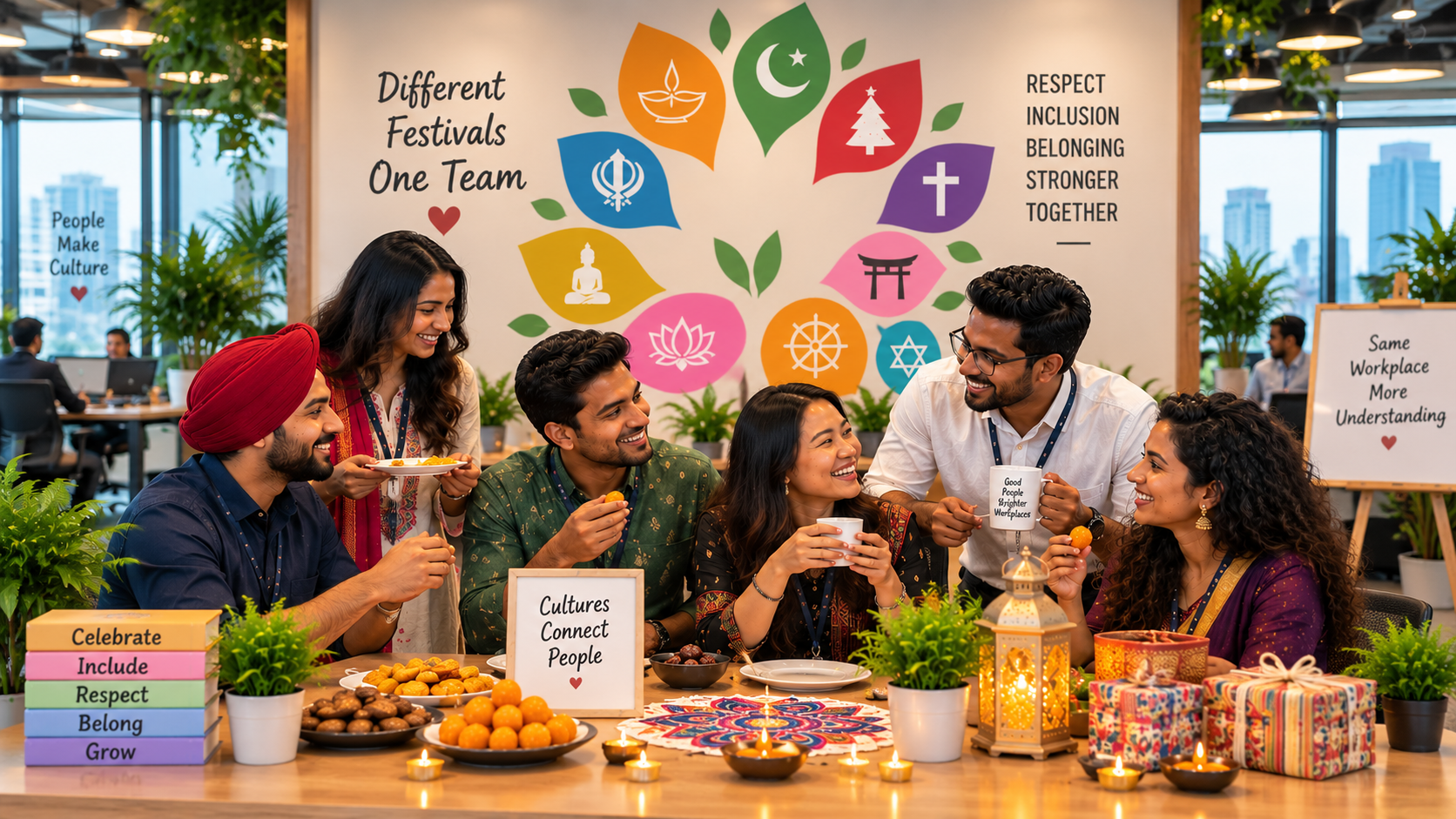
How to Celebrate Festivals at Work Without Leaving Anyone Out
How do you celebrate festivals at work without leaving anyone out? Here's how to build genuinely inclusive celebrations your whole team enjoys.
Most Indian workplaces celebrate something, Diwali is close to universal, Christmas and New Year get a mention, maybe Holi if the office has a terrace. What's less common is a festival calendar that actually reflects the full diversity of the people working there, and it's easy for well-meaning celebrations to quietly centre one community's traditions while treating everyone else's as optional or invisible. Inclusive festival celebrations at work take a bit more intentionality than picking the two or three most obvious dates on the calendar.
Why This Is Worth Getting Right
Festival celebrations are one of the most visible signals of whether a workplace genuinely values its people as individuals or treats culture as a generic, one-size-fits-all backdrop. An employee who never sees their own festivals acknowledged, while colleagues' celebrations get company-funded events year after year, notices that gap, even if they never mention it directly. Getting this right isn't about celebrating everything equally elaborately; it's about making sure nobody feels like an afterthought in their own workplace.
How to Build a Genuinely Inclusive Festival Calendar
Start by actually knowing your workforce's diversity, a short, anonymous internal survey on which festivals matter to employees gives HR real data to plan around, rather than defaulting to whichever festivals are already culturally dominant or most visible externally.
Rotate the scale of celebration, not just the list, if Diwali gets a full company event every year, look for opportunities to give other significant festivals, Eid, Christmas, Navratri, Onam, Pongal, Bihu, similar visibility on a rotating basis, rather than treating every other festival as a smaller, optional add-on.
Involve employees from the relevant community in planning, rather than HR unilaterally deciding how a festival should be celebrated, inviting employees who actually observe it to shape the celebration avoids well-intentioned but tone-deaf missteps.
Be thoughtful about food and dietary considerations, festival celebrations often centre around food, so accounting for dietary restrictions tied to different religious practices, not just vegetarian versus non-vegetarian, matters more than it might seem.
Make participation genuinely optional, not just nominally so, especially for religious festivals, ensure employees who don't wish to participate for personal reasons don't feel socially pressured to, and that non-participation carries no professional cost.
Acknowledge festivals even without a full event, not every festival needs a company-funded celebration; a simple, genuine acknowledgment, a message, decorations, a half-day where relevant, goes a long way for festivals that might not warrant a major event but still matter to employees who observe them.
Common Mistakes Companies Make With Festival Celebrations
The most frequent mistake is defaulting to whichever festivals are most commercially visible or most familiar to leadership, rather than what actually reflects the workforce's real diversity.
The second mistake is treating "inclusive" as "generic", stripping celebrations of specific cultural or religious meaning in an attempt to be neutral, which often ends up feeling hollow rather than genuinely respectful of the traditions being marked.
The third mistake is assuming a single company-wide event covers everyone, when smaller, community-specific acknowledgments alongside larger shared celebrations often land better than trying to make one event represent everything.
What This Looks Like in Practice
A company with a genuinely mixed workforce might run one or two larger, company-wide celebrations a year that bring everyone together, alongside smaller, community-led acknowledgments for festivals specific to particular groups, a Diwali mithai exchange, an Eid lunch, a Christmas decoration corner, a Pongal harvest note. Neither element replaces the other; together, they signal that celebration in this workplace isn't limited to whichever tradition happens to be most dominant.
Building This Into a Broader Culture Strategy
Festival celebrations work best as part of a broader, intentional culture strategy rather than as a standalone HR calendar item. ICE's Connect pillar builds shared experiences, including culturally rotated celebrations, into a recurring engagement calendar, while Inform supports the consistent, thoughtful communication that helps a celebration land the way it's intended. For related reading, see why strong company culture starts with everyday experiences on the ICE blog.
Follow ICE on LinkedIn, Instagram, Facebook, and YouTube for more HR and culture resources.