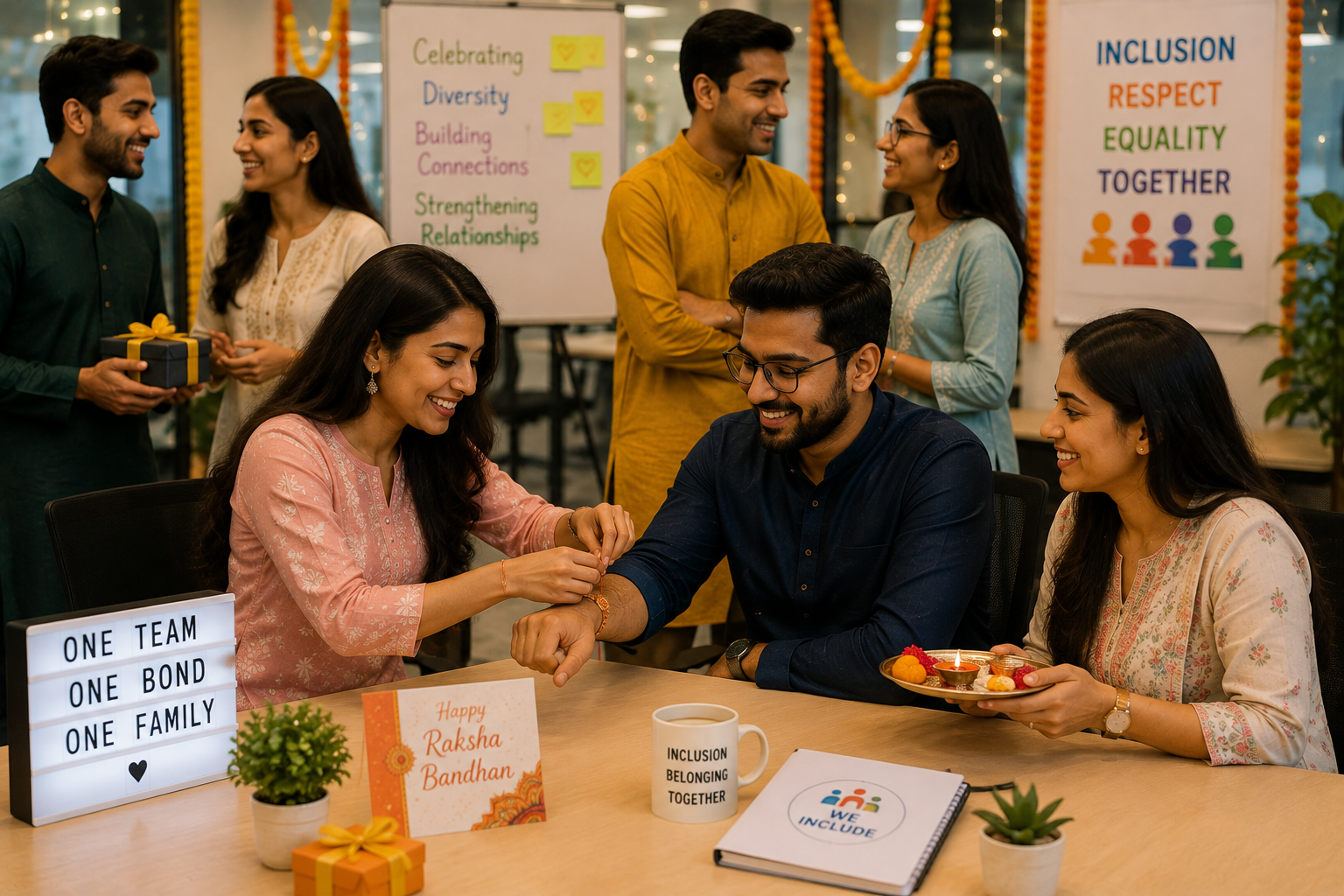
How HR Can Use Festivals Like Raksha Bandhan to Boost Inclusion
Festival celebrations at work can either bring teams closer together or unintentionally leave people out. Here's how HR can use occasions like Raksha Bandhan to build genuine inclusion, not just a one-day celebration.
How HR Can Use Festivals Like Raksha Bandhan to Boost Inclusion
Festivals like Raksha Bandhan are often celebrated at workplaces with good intentions, a rakhi tying ritual, some sweets, maybe a small team activity. But without thoughtful planning, these celebrations can unintentionally exclude employees who don't relate to the specific cultural or religious context, leaving them to feel more like observers than participants. Used well, however, festival celebrations can become genuine opportunities for HR to strengthen inclusion and deepen employee engagement, not just mark a date on the calendar.
Start With Intent, Not Just Tradition
Before planning a Raksha Bandhan celebration, it helps for HR to step back and ask what the goal actually is. Is it to honor a specific cultural tradition, or is it to create a moment of connection and appreciation across the team? These are not mutually exclusive, but clarifying the intent shapes how the celebration should be designed.
When the goal shifts from "celebrating a festival" to "creating connection through a festival," it becomes easier to design something that feels welcoming to employees regardless of their background, rather than assuming everyone shares the same relationship with the occasion.
Reframe the Celebration Around Universal Themes
Raksha Bandhan is rooted in the bond between siblings, but the underlying themes, protection, care, and mutual support, are universal and can be reframed to include everyone, not just those who observe the festival traditionally. HR can build activities around "workplace bonds" or "colleagues who have your back," allowing employees from different backgrounds to participate meaningfully without needing to adopt a specific cultural practice.
This kind of reframing turns a single-community celebration into a shared moment of appreciation, which tends to land better across a diverse workforce than a celebration that only makes sense to one group.
Make Participation Optional, Never Assumed
One of the most common inclusion missteps happens when festival participation is treated as automatic rather than optional. Employees should never feel pressured to take part in rituals tied to a religion or culture that is not their own. HR can offer participation as a warm invitation, alongside genuinely appealing alternatives, so that opting out never feels like standing apart from the team.
Thoughtful connection focused engagement experiences can help here, offering activities that build the same sense of camaraderie without requiring participation in a specific ritual, giving every employee a meaningful way to be part of the moment.
Involve Employees From Different Backgrounds in Planning
Inclusion improves significantly when the planning process itself includes diverse voices, not just the execution. Involving employees from different cultural and religious backgrounds in shaping how a festival is celebrated at work helps surface blind spots HR might not think of on its own, and often leads to more creative, genuinely inclusive ideas than a top-down plan ever would.
This also signals to the broader team that inclusion is a real value, not a checkbox exercise handled quietly by HR alone.
Use the Occasion to Build Broader Engagement, Not Just a One Day Moment
Festival celebrations work best as engagement tools when they connect to something ongoing, rather than existing as an isolated event. HR can use the spirit of Raksha Bandhan, protection, support, and connection, as a springboard for broader initiatives like peer support programs or mentorship pairings that continue well beyond the day itself.
Thoughtfully chosen gifts and goodies tied to the occasion can also reinforce this sense of appreciation in a way that feels personal rather than performative, especially when gifting is designed to be meaningful for everyone, not tied narrowly to the festival's traditional format.
Final Thoughts
Festivals like Raksha Bandhan offer HR a real opportunity to build inclusion and engagement, but only when celebrations are designed with intention rather than assumption. By reframing around universal themes, keeping participation genuinely optional, involving diverse voices in planning, and connecting the moment to longer term engagement efforts, HR can turn a single festival into a meaningful step toward a more inclusive workplace culture.
If you're ready to build festival celebrations that genuinely include everyone, explore ICE's full range of services or learn more about our approach to building inclusive workplaces.