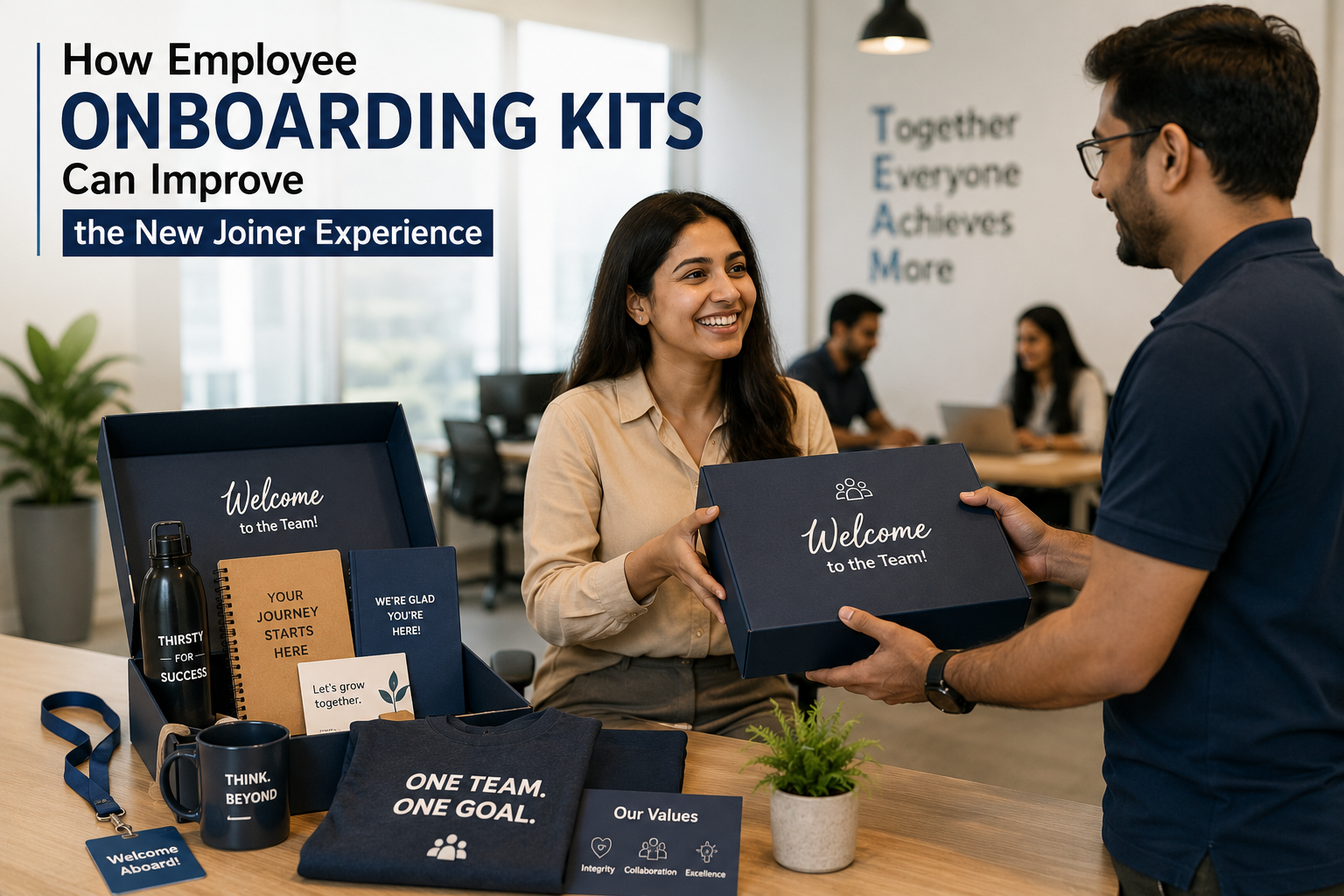
How Employee Onboarding Kits Can Improve the New Joiner Experience
A new hire's first impression is shaped long before their first project. Here's how a well-designed onboarding kit can make that impression count.
The first few days at a new job set the tone for how long someone stays and how quickly they feel like part of the team. Long before performance reviews or project deadlines, it's the small, tangible details, a desk that's ready, a kit that feels considered, that shape a new hire's earliest impression of the company. An onboarding kit often gets treated as a minor logistical item, but done well, it becomes one of the simplest, most effective ways to make a new joiner feel genuinely welcomed rather than just processed.
Why the First Few Days Matter More Than HR Often Assumes
Research on employee retention consistently points to the earliest days of a job as disproportionately influential in shaping long-term engagement. A new hire forming an impression of "I made the right choice" versus "this feels transactional" often happens within the first week, well before they've had time to evaluate the actual work. An onboarding kit is one of the few tools HR has that directly shapes this emotional first impression, not through policy or process, but through something tangible the new hire can hold.
Move Beyond Purely Functional Items
Most onboarding kits stick to the basics, ID card, a notebook, maybe a pen, functional, but forgettable. New hires notice the difference between a kit that feels like standard-issue equipment and one that feels like an actual welcome. Including at least one item that isn't purely functional, something that reflects the company's personality or a small local touch, shifts the kit from feeling procedural to feeling personal. This is where thoughtful gifting and goodies can add genuine warmth to what would otherwise be a purely operational handover.
Personalize Where It's Easy To
Full customization for every new hire isn't realistic at scale, but small personal touches go a long way without much added effort. A note referencing their specific role or team, an item relevant to their department, even addressing the kit with their name rather than a generic label, all signal that someone thought about this specific person, not just "new hires" as a category.
Pair the Kit With Clear, Warm Communication
An onboarding kit delivered without context can feel like it appeared out of nowhere. A short note explaining what's included, or a brief message from their manager or team welcoming them ahead of day one, gives the kit more meaning and helps new hires feel expected rather than simply scheduled. This kind of early, considered communication is closely tied to how reliable internal communication shapes the broader onboarding experience, the kit is one touchpoint, but the communication around it matters just as much.
Get the Timing Right
An onboarding kit that arrives late loses much of its intended impact. For in-office joiners, having it visibly ready at their desk on day one matters. For remote hires, the kit needs to arrive before their start date, not during their first week, since the emotional value comes from that very first moment, not from eventually receiving something useful.
Keep It Proportionate, Not Overloaded
More items don't automatically create a better impression. An onboarding kit stuffed with excess branded merchandise often ends up feeling like leftover inventory rather than a considered gift. A smaller kit with a few genuinely good, relevant items tends to land better than a large one filled with filler nobody asked for.
Treat the Kit as Part of a Larger First Impression
An onboarding kit works best as one piece of a broader first-week experience, alongside a clear onboarding schedule, genuine team introductions, and a manager who's actually prepared for their arrival. On its own, even an excellent kit has limits. Combined with a thoughtfully structured first week, it becomes part of an experience that genuinely shapes how a new hire feels about their decision to join.
Final Thoughts
An onboarding kit improves the new joiner experience when it moves beyond purely functional items, includes small personal touches, and arrives at the right moment paired with genuine communication. HR teams that treat the kit as an emotional first impression, not just a logistical checklist, tend to see new hires settle in with far more confidence and connection from day one.
If you're ready to build an onboarding kit experience that leaves a lasting first impression, explore ICE's full range of services or learn more about our approach to supporting stronger workplaces.