Employee Wellness Programs in Mumbai: Which Type Fits Your Workforce?
Which employee wellness programs in Mumbai fit your team? Compare program types, who each suits, and how to pick without wasting budget.
Ask three HR leaders in Mumbai what their employee wellness programs include and you will hear three completely different answers: a gym tie-up, an annual health camp, a counselling helpline. All of them are called wellness programs, and they solve very different problems. Choosing among employee wellness programs in Mumbai gets much easier once you can see the main types side by side and know which workforce each one actually suits.
This guide compares the main types of programs, explains who each is best for, and shows how to choose without paying for features your people will never use.
Why the Type of Program Matters More Than the Price
Wellness spending often disappoints because the program was picked for convenience, not fit. Industry research on workforce health has found that poor employee mental health alone is estimated to cost Indian employers around ₹1.1 lakh crore a year, according to the CII-MediBuddy workplace health report. The cost of getting wellness wrong is real, and it usually comes from a mismatch between what is offered and what a particular workforce needs.
Types of Employee Wellness Programs in Mumbai
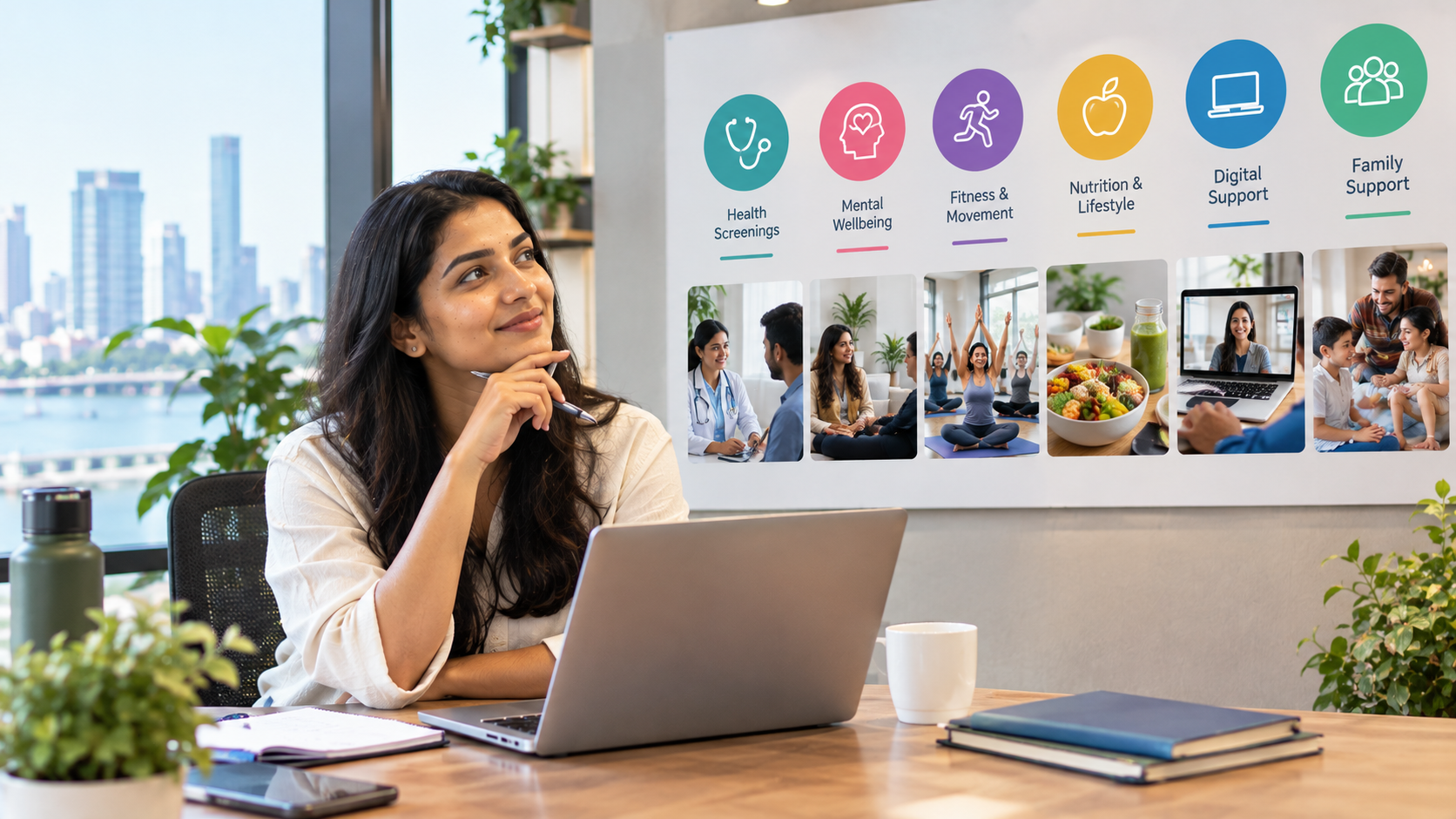
Preventive health and screening programs
These cover diagnostic screening, eye and dental checks, and specialist consultations delivered on site or through a nearby partner network. They suit almost every workforce, and matter most for desk-based teams where chronic strain builds quietly. Their weakness is that a once-a-year camp changes little without follow-up, so look for programs that connect screening to ongoing support.
Mental health programs
These provide confidential counselling or psychologist-led sessions, plus manager training in spotting burnout. They suit high-pressure sectors such as finance, consulting, IT and BPO, where stress runs high. Government survey data from NIMHANS found mental disorder prevalence was nearly twice as high in urban metro regions as in rural areas, which puts a city like Mumbai in the higher-risk category. The weakness here is trust: if employees doubt confidentiality, usage collapses.
Fitness and movement programs
These include guided stretching, yoga, group fitness and walking challenges. They suit teams that sit for most of the day. The WHO's guidelines on physical activity and sedentary behaviour recognise prolonged sitting as a health risk and recommend regular movement to offset it. These work best scheduled inside the workday, not after a long commute.
Nutrition and lifestyle programs
Dietitian sessions and practical guidance suit teams with irregular schedules, such as shift workers and late-finishing teams, where meal timing is disrupted. They work when advice is realistic for the schedule people actually have.
Digital and on-demand programs
Apps, virtual counselling and recorded sessions suit hybrid teams and employees across multiple locations. They extend reach but depend heavily on how well they are communicated.
Family and dependent-inclusive programs
Coverage or events that include family members suit workforces with many employees who live locally with dependents. Perceived value tends to rise noticeably when support extends beyond the individual.
Which Type Fits Which Workforce?
Desk-heavy IT and tech teams usually benefit most from preventive screening, physiotherapy and movement programs, plus mental health access. BFSI, consulting and legal teams, where hours are long and pressure is constant, gain most from confidential mental health support and manager training. BPO and shift-based teams need flexible delivery across shifts, nutrition guidance suited to irregular hours, and counselling available outside standard hours. Hybrid teams need digital access alongside on-site options, so remote days are not left out. Smaller companies of under a hundred people often do best starting with two or three focused components instead of a sprawling package.
What Mumbai Adds to the Choice
Commute time is the quiet constraint behind most wellness decisions in Mumbai. A program that requires employees to travel during work hours, or stay after a long day, sees weak participation. Office space is another: many Mumbai offices cannot host a gym or wellness room, so visiting practitioners and compact, equipment-light sessions often work better. And hybrid schedules mean any program built only for in-office days misses part of the team.
Why Many Wellness Programs Still Underperform
Research on workplace wellness has found that employee assistance programs are offered by about 98% of large companies, yet utilisation typically sits between just 2% and 6%. The usual causes are low awareness, doubt about confidentiality, and programs that target individual habits without touching the workload and management issues that create stress. The type of program matters, but so does how it is communicated and whether the working conditions around it are reasonable.
How to Choose Among Employee Wellness Programs in Mumbai
Start by asking employees what they would actually use, through a short anonymous survey, and check which existing benefits already see real usage. Pick the two or three types that match your workforce, rather than everything at once. Ask providers how confidentiality works, how sessions are scheduled around your teams, and what happens after a screening. Plan how the program will be communicated, because awareness decides usage. Then review utilisation every quarter and adjust.
How to Measure Whether a Wellness Program Is Working
Track repeat voluntary use of ongoing services such as counselling and physiotherapy, which says far more than turnout at a single event. Watch participation across shifts and locations, not just in aggregate. Review absenteeism and wellbeing-related survey responses over two or three cycles. A steady or growing trend is the signal you are looking for.
Building a Program With ICE
ICE's Health & Wellness offering brings together 18 ready-to-deploy services, covering preventive screening, psychologist-led sessions, physiotherapy and specialist consultations, so employee wellness programs in Mumbai can be assembled around what your workforce needs, not a fixed package. For more on program design, read what a corporate wellness program should actually include, how to choose corporate wellness services for your workforce and how wellness programs support employee productivity. To talk through your own team, contact ICE.
Follow ICE on LinkedIn, Instagram, Facebook, and YouTube for more HR and wellness resources.