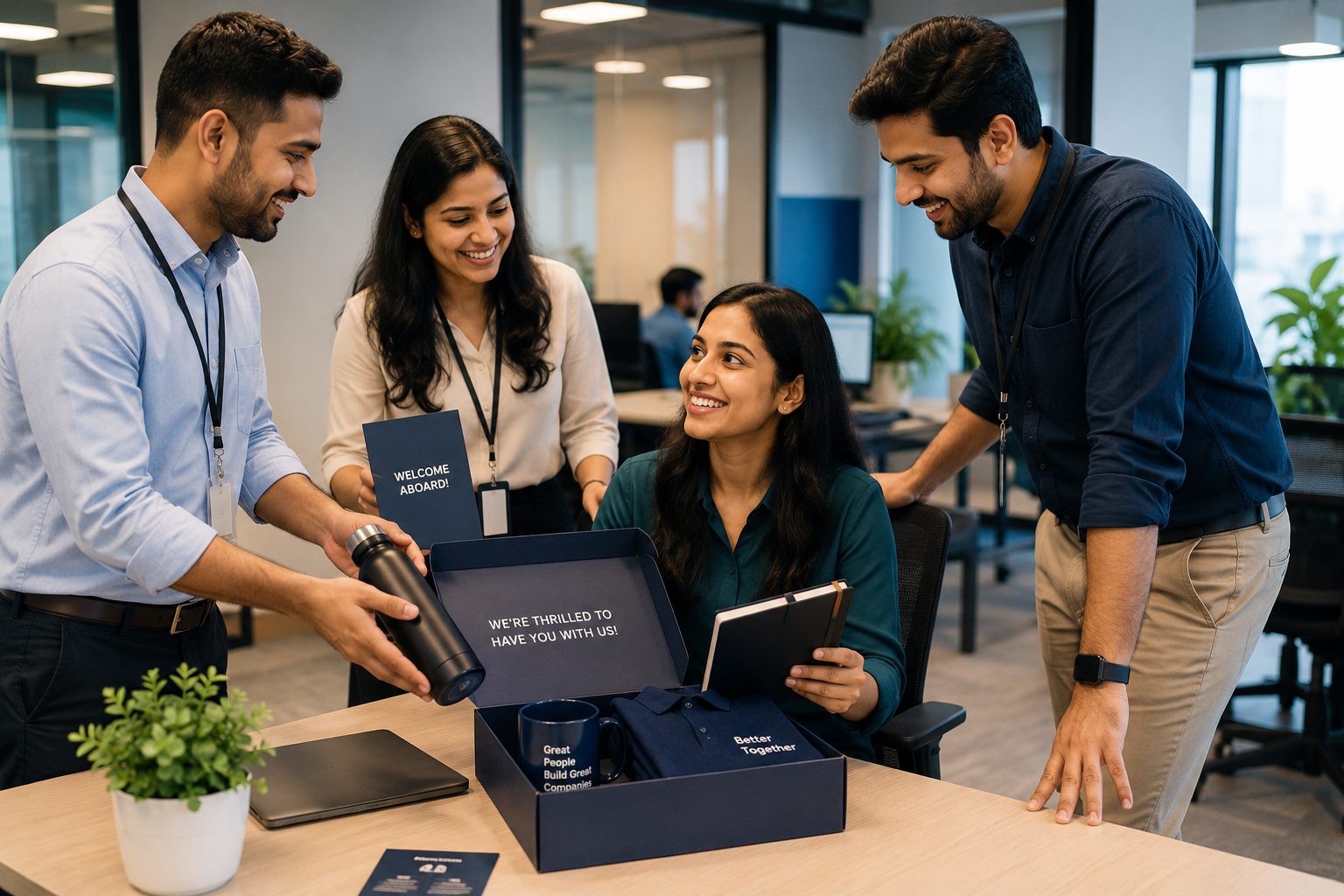
Employee Welcome Kits: What Should HR Include for New Joiners?
A welcome kit is often a new hire's first tangible impression of the company. Here's what HR should actually include to make it count.
A new joiner's first day shapes how they feel about a company far more than most onboarding checklists account for. Somewhere between the laptop setup and the HR paperwork, the welcome kit often gets treated as an afterthought, a branded notebook, a pen, maybe a water bottle, assembled without much thought because "every company does this." But a welcome kit is one of the few onboarding touchpoints that's entirely physical and entirely personal, and what it contains says more about the company's culture than most new hires would expect on day one.
Lead With Usefulness, Not Just Branding
The most common mistake in welcome kits is prioritizing branding over utility. A notebook, pen, and mug with the company logo plastered across every item can feel more like marketing collateral than a genuine welcome. Items a new hire will actually reach for and use, a good quality notebook, a reliable water bottle, something relevant to their actual role, tend to leave a far better impression than items chosen purely because they're easy to brand in bulk.
Include Something That Signals Culture, Not Just Operations
Most welcome kits stick to functional items, ID cards, stationery, a laptop bag. Adding one thing that reflects the company's personality, a handwritten note from the team, a small local touch, something that isn't purely transactional, helps a new hire feel like they've joined a culture, not just a payroll system. This is where thoughtful gifting and goodies can add a layer of warmth that standard onboarding paperwork simply can't.
Make Room for Something Personal
A welcome kit built entirely around company-wide standard items misses the opportunity to make a new hire feel individually noticed. Even something small, a note referencing their role or team, a snack or item tied to their specific department, adds a level of personalization that a purely generic kit doesn't. New hires notice the difference between a kit that feels mass-produced and one that feels like it was actually assembled with them in mind.
Don't Overload It
There's a temptation to pack the kit with as many items as possible to make it feel more generous. In practice, an overstuffed kit often has the opposite effect, most items go unused, and the kit starts to feel more like leftover inventory than a considered gift. A smaller kit with a few genuinely good items tends to land better than a large kit filled with filler.
Think About Timing and Delivery, Not Just Contents
For in-office joiners, having the kit ready and visible on the desk on day one makes a strong first impression. For remote or hybrid hires, the kit needs to arrive before or on their first day, not weeks later, since a delayed kit loses most of its emotional impact. Planning delivery logistics as carefully as the contents themselves ensures the gesture actually lands at the moment it's meant to.
Connect the Kit to the Rest of the Onboarding Experience
A welcome kit works best as one part of a broader first impression, alongside clear communication, a structured onboarding schedule, and genuine introductions to the team. On its own, even a well-designed kit can only do so much. Paired with reliable, well-planned internal communication throughout the onboarding process, it becomes part of a first-week experience that actually feels considered from start to finish.
Ask New Hires What Actually Landed
Few companies follow up to ask new joiners what they thought of their welcome kit, yet this feedback is one of the easiest ways to improve it over time. A quick, informal question a few weeks in, what stood out, what went unused, can help HR refine the kit for future joiners rather than repeating the same format indefinitely simply because it's already been decided.
Final Thoughts
A welcome kit works best when it prioritizes usefulness and personalization over generic branding, and when it's treated as one part of a considered onboarding experience rather than a box ticked before day one. HR teams that put real thought into what a new hire receives, and when they receive it, tend to create a first impression that actually sticks.
If you're ready to build a welcome kit experience that makes a strong first impression, explore ICE's full range of services or learn more about our approach to supporting stronger workplaces.