Employee Health Screening: What Should HR Include in a Workplace Program?
Not every health screening program needs to test for everything. Here's what HR should actually include to build a program that's useful, not just comprehensive-looking.
When HR sets out to design a workplace health screening program, the instinct is often to include as much as possible, more tests, more categories, more coverage. A longer checklist can feel like it signals thoroughness, but in practice, a program built this way often ends up expensive, rushed on the day, and only loosely relevant to what the workforce actually needs. A well-designed screening program isn't about testing for everything, it's about testing for the right things, delivered in a way employees will actually engage with.
Start With Core Vitals That Apply to Everyone
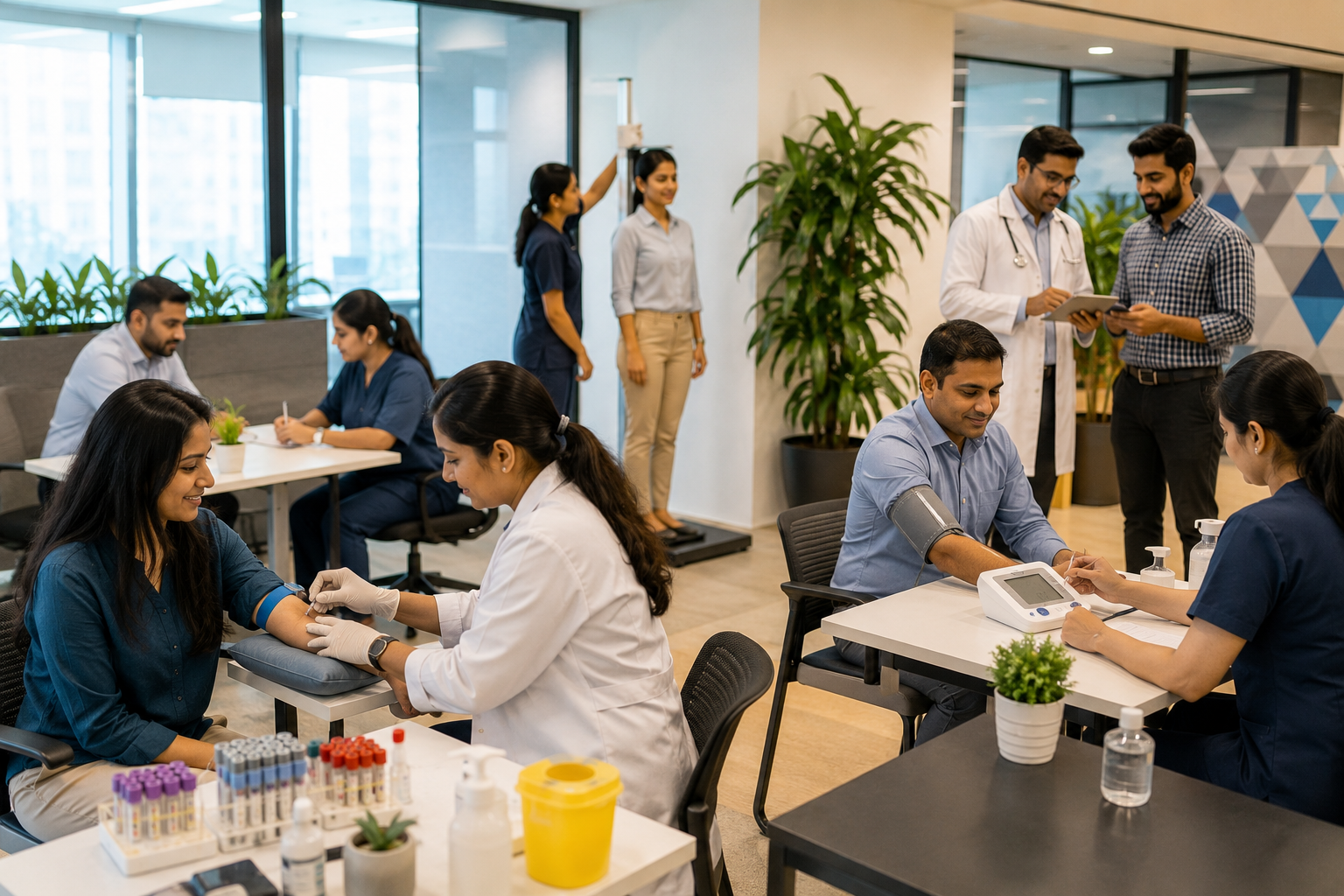
Regardless of role, age, or department, a few baseline checks form the foundation of any useful screening program, blood pressure, BMI, and blood sugar levels. These are quick to administer, relevant to nearly the entire workforce, and often reveal early warning signs employees wouldn't otherwise think to check. Building the program around these core vitals first, before adding anything more specialized, keeps the screening accessible and ensures every participant walks away with baseline information about their health.
Add Screenings That Reflect the Actual Workforce
Beyond the basics, the most useful additions come from understanding the specific workforce being screened, not from a generic template. A workforce with a large proportion of desk-based, screen-heavy roles benefits from vision screening and postural assessments. A workforce skewing older may benefit more from cardiac or cholesterol screening. Reviewing absenteeism trends or past health camp participation data can point HR toward what's actually worth prioritizing, rather than defaulting to a one-size-fits-all panel.
Include a Consultation, Not Just a Report
A screening program that ends with a printed report and no explanation misses much of its potential value. Employees, especially those unfamiliar with medical terminology, benefit far more from a short consultation where a professional walks them through what their results actually mean and what, if anything, they should do next. This single addition often determines whether a screening program leads to real follow-up action or simply gets filed away and forgotten.
Build In Mental Health Screening, Not Just Physical
Workplace health screening programs have traditionally focused almost entirely on physical health, but mental wellbeing deserves a place in the program too. A simple, confidential stress or wellbeing assessment, paired with information on available support resources, signals that the organization takes mental health as seriously as physical health. This is increasingly expected as part of a genuinely comprehensive employee wellness approach, not an optional add-on.
Make Confidentiality Explicit From the Start
Screening programs only work if employees trust the results stay private. HR should be upfront, before the program even launches, about where individual results go, how any aggregated data will be used, and that participation has no bearing on performance evaluation. Without this clarity stated plainly, participation rates tend to suffer regardless of how well-designed the actual screening panel is.
Keep the Time Commitment Realistic
A program that looks efficient on paper can quickly become a bottleneck if too many screenings are packed into a single session without proper time allocation. Pre-booked slots, a clear per-employee time estimate, and staggered scheduling across departments help avoid long queues and rushed assessments that undermine the quality of the screening itself.
Plan the Follow-Up Before the Screening Happens
A screening program's real value shows up in what happens after results come in. HR should decide in advance how employees flagged for follow-up will be supported, whether that's a referral pathway, a point of contact, or a simple next-steps guide. Without this plan in place beforehand, even well-run screenings risk ending as a one-time data collection exercise rather than something that actually improves employee health outcomes.
Final Thoughts
A workplace health screening program works best when it's built around relevance rather than volume, core vitals for everyone, targeted additions based on actual workforce needs, mental health included alongside physical, and a clear plan for confidentiality and follow-up. HR teams that design with intent, rather than defaulting to the longest possible checklist, tend to see screening programs employees genuinely trust and engage with.
If you're ready to build a health screening program that's designed around your workforce, explore ICE's full range of services or learn more about our approach to supporting stronger workplaces.