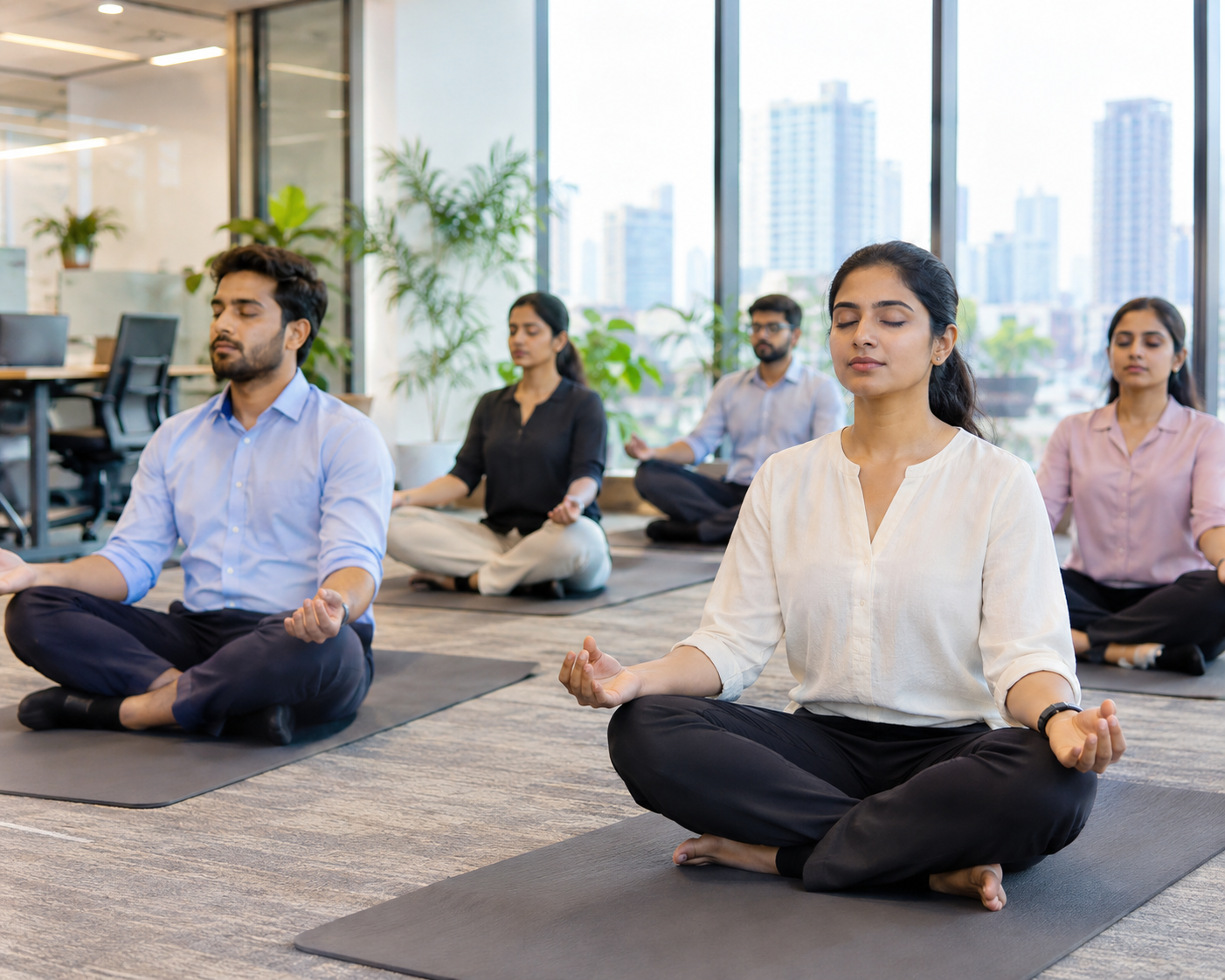
Corporate Yoga Sessions in Mumbai: What Works in the Office and What the Research Says
Planning corporate yoga sessions in Mumbai? Here is what works in office spaces, how to schedule around commutes, and what the research says.
Most companies in Mumbai think of yoga on one day: 21 June, International Day of Yoga. A session gets booked, people roll out mats in the conference room, photos go on LinkedIn, and then nothing happens until next June. That is a nice gesture, but it is not a programme. Corporate yoga sessions in Mumbai work best when they are regular, short, safe and designed around the realities of a Mumbai workday: cramped offices, long commutes, humid weather and teams that sit for hours.
This guide explains what the research actually says, which formats suit Mumbai offices, how to schedule and run sessions, and how to avoid the common mistakes.
What the Research Says About Workplace Yoga
A systematic review and meta-analysis of workplace yoga interventions pooled the evidence and found an overall effect size of -0.67 in favour of yoga for reducing perceived stress among employees, compared with no treatment. In plain terms, employees who took part in workplace yoga reported meaningfully lower stress than those who did nothing.
It helps to read that result carefully. The comparison was against no intervention, so it does not prove yoga beats every other activity. Studies also vary in design and quality. Yoga is not a cure for burnout caused by unmanageable workload or poor management. But as one part of a wider wellness approach, the evidence supports it as a low-cost way to help employees manage stress.
Desk-based work adds another reason. The WHO’s guidelines on physical activity and sedentary behaviour recognise prolonged sitting as a health risk and recommend regular movement, which is exactly what short stretching and posture-focused sessions provide.
Why Corporate Yoga Sessions in Mumbai Need a Mumbai-Specific Design
Space is limited. Many offices in business districts like BKC and Lower Parel have no spare room, so sessions need to work in a meeting room, a pantry area or even at the desk. Larger campuses, for example in Powai and Goregaon, may have more room, including outdoor space.
Commutes eat into evenings. Sessions after work get poor attendance. Lunch-hour and mid-afternoon slots do far better.
The weather affects planning. Heat and humidity make midday outdoor sessions unpleasant for much of the year, and monsoon rain can cancel outdoor plans. Have an indoor option.
Workforces are varied. A mixed team includes beginners, people with old injuries, older employees and people who are not interested. Sessions must work for all of them and be genuinely optional.
Formats That Work in Mumbai Offices
Chair yoga and desk stretches
Ten to twenty minutes of gentle movement for the neck, shoulders, back and wrists, done in work clothes at or near the desk. This is the easiest format to run and the most inclusive.
Lunch-hour mat sessions
A thirty-minute guided session in a meeting room or open area, with mats provided. Participants can change quickly or stay in comfortable clothes.
Breathing and relaxation sessions
Short guided breathing and relaxation practice, useful before demanding periods or after intense days. These need no equipment and can run in almost any space.
Weekend or half-day wellness sessions
Longer sessions, sometimes with families, work well as a special event once or twice a year, for example around International Day of Yoga.
Virtual and hybrid sessions
Live online sessions let hybrid and remote employees join. Recorded sessions help people who cannot attend at the set time.
How to Run Corporate Yoga Sessions Well
Use a qualified instructor. Look for an instructor with recognised training and experience working with office groups and mixed ability, who can offer modifications for different bodies and conditions.
Keep it regular. Weekly or fortnightly short sessions build a habit. A single annual session mostly produces photos.
Make it optional, and keep it inclusive. Participation should never be required. Yoga is practised by people of many backgrounds, but some employees may prefer not to join, and that choice should carry no judgement. Frame the programme as movement and stress relief.
Prioritise safety. Ask participants to move within their comfort and to tell the instructor about injuries or health conditions. Employees who are pregnant or have medical conditions should check with their doctor before joining.
Pick the right time. Mid-morning, lunch and mid-afternoon tend to work best. Avoid the busiest deadline periods unless sessions are short.
Provide basics. Mats, a clean space and a quiet corner make the experience better. Let people know they can join in work clothes.
How to Measure Whether It Is Working
Track repeat attendance, because the same people coming back across several weeks says more than a big turnout at the first session. Ask for short feedback after sessions. Include a simple stress or energy question in pulse surveys over time. And watch whether sessions help bring in people who do not usually join wellness activities.
Common Mistakes With Corporate Yoga Sessions in Mumbai
The most common mistake is treating yoga as a once-a-year event. The second is hiring an unqualified instructor, which creates injury risk and poor experiences. The third is making it mandatory, which turns relaxation into pressure. The fourth is scheduling after hours. The fifth is offering yoga alone and calling it a wellness strategy, when employees also need confidential mental health support, physical care and reasonable workloads.
Where Yoga Fits in a Wider Wellness Programme
Yoga works best as one component in a broader approach that includes preventive screening, mental health support, physiotherapy and good communication about what is available. ICE’s Connect pillar is built around recurring physical activity and wellness experiences, and its Health & Wellness offering includes 18 ready-to-deploy services such as preventive screening, psychologist-led sessions and physiotherapy. If you want to add corporate yoga sessions to a calendar, get in touch with ICE to discuss what suits your office and team size. For more on programme design, read what a corporate wellness program should actually include and how to choose corporate wellness services for your workforce.
Follow ICE on LinkedIn, Instagram, Facebook, and YouTube for more HR and wellness resources.