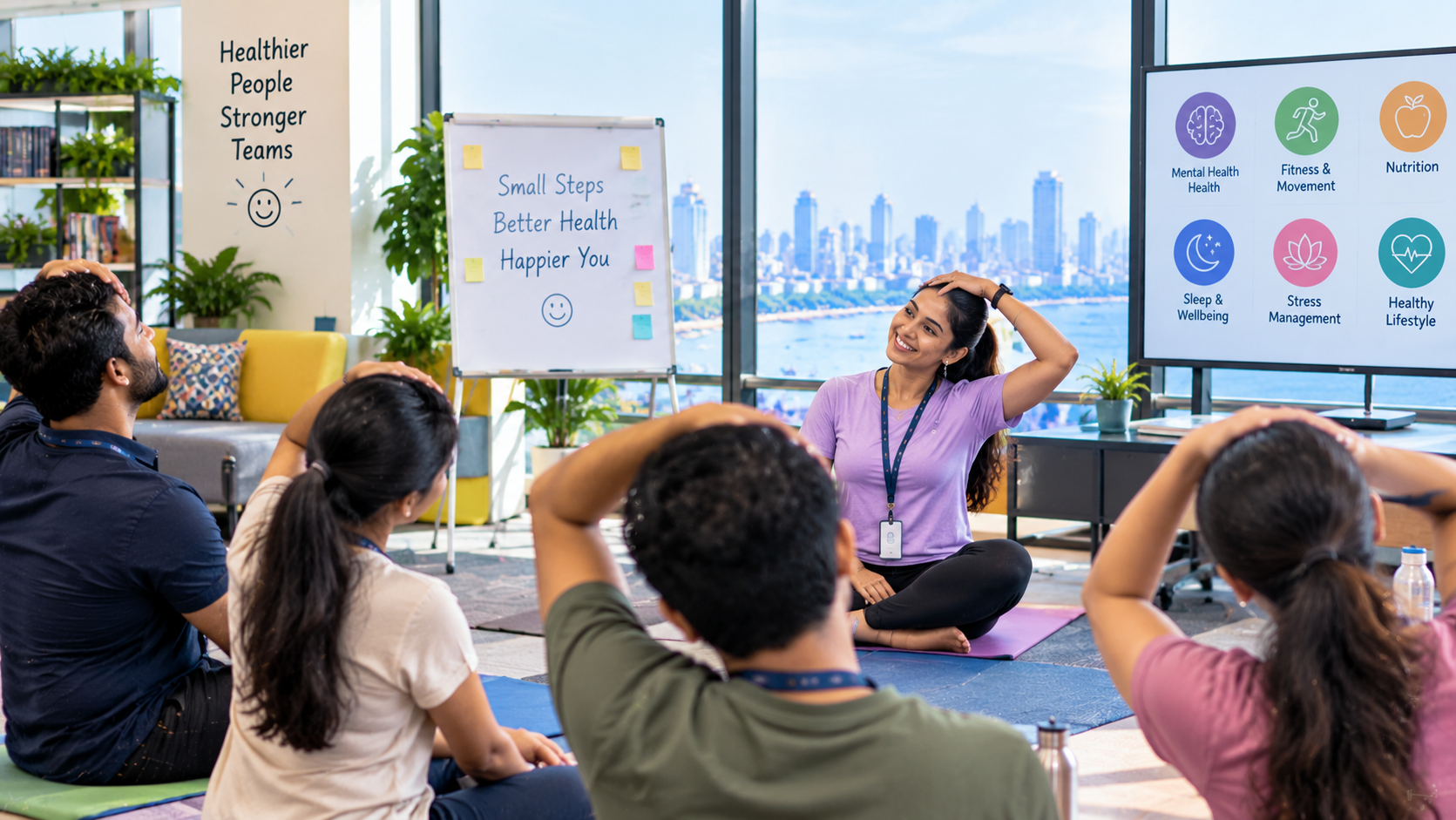
Corporate Wellness Workshops in Mumbai: Which Topics and Formats Work, and How to Make Them Stick
Corporate wellness workshops in Mumbai: the best topics, formats and timing, plus how to turn a one-off session into lasting change.
A speaker comes in at 4 pm on a Friday, talks about stress for an hour, and people clap politely and go home. That is the picture many HR teams have in mind when they search for corporate wellness workshops in Mumbai, and it explains why workshops sometimes feel like a box ticked rather than a change made. Done well, a workshop series can teach practical skills, start honest conversations and connect employees to ongoing support. Done badly, it is a one-hour talk everyone forgets by Monday.
This guide covers the best topics, formats and timing for Mumbai workplaces, and what the research says about making workshops stick.
What the Research Says About Making Workshops Work
The strongest evidence comes from stress management. A meta-analysis of occupational stress management programmes, summarised by the Centre for Reviews and Dissemination, found medium to large favourable effects, with cognitive-behavioural programmes (which teach practical skills for handling stressful thoughts and situations) producing the largest effects. Most of the programmes studied were group training sessions, and they typically ran for around seven sessions, not a single talk.
The review focused on stress management, so it would be wrong to apply it to every workshop topic. But the practical takeaway is useful. Skills-based, multi-session workshops have a better evidence base than one-off lectures. A single session can raise awareness. Lasting change usually needs practice and repetition.
Corporate Wellness Workshops in Mumbai: Topic Ideas
Choose topics that match what your employees actually face.
Stress management and resilience. Practical skills for managing pressure, thinking patterns and recovery. Best delivered as a series.
Burnout awareness and recovery. How to recognise early warning signs and what to do. Useful for high-pressure sectors such as finance, consulting and IT.
Mental health awareness for managers. How to notice when someone is struggling, have a supportive conversation and point them to professional help. Managers need this more than most employees realise.
Sleep and fatigue. Practical for long commuters and shift workers, whose sleep is often disrupted.
Nutrition for long working days. Realistic eating guidance for desk workers, shift teams and people who skip meals.
Ergonomics and desk health. Posture, eye strain and movement for screen-heavy roles, ideally with a physiotherapist.
Financial wellbeing. Basic budgeting, saving and managing debt. Money stress affects mental health and attention at work.
Women’s health awareness. Information sessions on common health concerns, handled sensitively and optionally.
Boundaries and digital detox. How to switch off, especially for hybrid and always-on teams.
Monsoon and seasonal health. Short pre-monsoon sessions on hygiene and when to see a doctor, particularly relevant in Mumbai.
First aid and emergency response. Practical, confidence-building and useful for everyone.
Preventive screening explained. What common health checks measure and why follow-up matters.
Choosing the Right Format
Lunch-and-learn (30 to 45 minutes). Good for awareness topics and for testing interest. Keep it practical and interactive.
Interactive workshop (60 to 90 minutes). Better for skills practice, with exercises and small-group discussion.
Half-day sessions. Useful for deeper topics such as manager training or a team reset.
A series (four to eight sessions). The best format for skills such as stress management or sleep habits, with short practice tasks between sessions.
Virtual and recorded. Live online sessions and recordings let hybrid and shift-based employees take part. Record sessions where the facilitator agrees and the content is not sensitive.
How to Choose Topics for Your Workforce
Ask employees directly through a short anonymous survey. Review what you already know: common reasons for sick leave, questions that come up with managers, and which existing benefits are underused. Consider the season: pre-monsoon health sessions in May, stress and recovery sessions around year-end. Think by role: desk workers need ergonomics and movement, shift workers need sleep and nutrition, managers need mental health awareness.
How to Pick a Facilitator
Match the expert to the topic. Mental health and stress sessions should be led by a qualified psychologist or counsellor. Nutrition sessions by a registered dietitian. Ergonomics and posture by a physiotherapist. Check experience with corporate groups and with Mumbai workforces, and ask for a sample outline. Prefer facilitators who include exercises, not only slides, and who can adapt language and examples to your team. Clarify confidentiality: employees should not be asked to share personal details in front of colleagues.
A workshop is education, not therapy. Always connect it to a route for confidential help, such as counselling access, so someone who is struggling has somewhere to go afterwards.
Scheduling for Mumbai
Hold sessions during working hours, ideally at lunch or mid-afternoon, since long commutes make after-hours sessions unreliable. Avoid month-end and major deadline periods. Offer more than one slot for shift-based teams. Provide a recording or a short summary for those who cannot attend. Make attendance optional, and let managers know that attending is fine.
Turn a Workshop Into Lasting Change
Send a one-page summary of key points and practical tips afterwards. Add a short follow-up a few weeks later, such as a ten-minute refresher or a challenge. Link the topic to services employees can actually use, for example counselling, physiotherapy or screening. Have managers mention the topic in team meetings. And measure, so you can adjust.
Workshops Work Better Alongside Good Working Conditions
The World Health Organization notes that workplace conditions and workload affect employees’ mental health. A stress workshop cannot make an unreasonable workload manageable. The best programmes pair workshops with realistic workloads, trained managers and trusted support services.
How to Measure Whether Workshops Are Working
Track repeat attendance across sessions, short pre- and post-session confidence questions, usage of the follow-up services mentioned in the workshop, and open feedback on what employees found useful. Over two or three quarters, look at wellbeing-related pulse questions and sick-leave patterns. Sustained, voluntary use of ongoing services says more than applause at a single session.
Common Mistakes With Corporate Wellness Workshops in Mumbai
The most common mistake is booking a single talk and expecting a change in habits. The second is choosing topics without asking employees. The third is hiring a facilitator without relevant qualifications. The fourth is scheduling after hours. The fifth is offering no follow-up or route to support. The sixth is using workshops as a substitute for fixing workload or management problems.
Getting Help Running Workshops
ICE’s Health & Wellness offering brings together 18 ready-to-deploy services, including psychologist-led mental health sessions, physiotherapy, preventive screening and specialist consultations, which can anchor and follow up a workshop series. Workshops sit naturally alongside ICE’s wider Connect calendar. For more on programme design, read what a corporate wellness program should actually include, how to choose corporate wellness services for your workforce and how wellness programs support employee productivity. To plan corporate wellness workshops in Mumbai for your team, get in touch with ICE.
Follow ICE on LinkedIn, Instagram, Facebook, and YouTube for more HR and wellness resources.